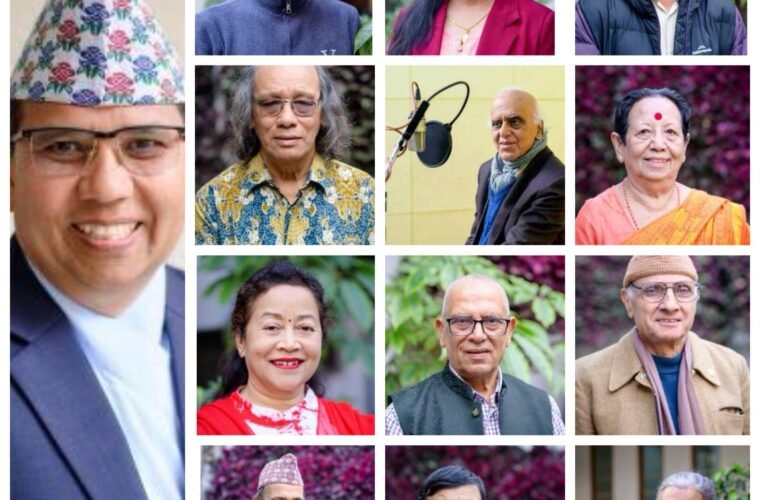
Kathmandu, June 27: Excerpts of works recited in their own voices by more than a dozen Nepali writers in Nepali, Nepalbhasha and Maithili languages have been included in the permanent digital archive of the Library of Congress of USA.
As a result, the audio archives are open to readers, scholars and researchers around the world.
The audio materials were recently made public in a new digital format under the South Asian Literary Recovery Project. After a year-long restructuring and online presentation project, the Library of Congress has made these archives easily accessible for global study and research.
The Library of Congress had earlier compiled the works recited in their own voices by Madhav Ghimire, Mohan Koirala, Madanmani Dixit, Dhruv Chandra Gautam, Banira Giri, Bhuwan Dhungana and Dinesh Adhikari in 2004. The latest project expands on that tradition and includes the voices of contemporary Nepali, Nepali language and Maithili literature creators in the international literary archive.
The new collection includes excerpts from works recited in their own voices by creators including Abhi Subedi, Ashesh Malla, Kali Prasad Rijal, Krisu Chhetri, Narayan Dhakal, Pratisara Sayami, Bhuvanhari Sigdel, Manu Manjil, Maya Thakuri, Momila, Rajendra Bimal, Sharada Sharma, Shravan Mukarung, Sarubhakta, Dhirendra Premarshi and Gyanuwakar Poudel.
According to writer Krisu Chhetri, these audio archives have preserved not only the creation but also the pronunciation, rhythm, flow of emotions and linguistic culture of the creator for future generations.
Launched in 2002, the SALRP South Asian Literary Recordings Project also includes sound recordings, photographs and brief biographies of the authors. These materials have been made available for global study and research through the ‘South Asian Digital Collection’.
Literary scholar Chhetri said that this new digital presentation has built an important bridge connecting the strong voices of Nepali, Nepali language and Maithili literature with the international literary community. According to him, SALRP has established itself as an important tool that preserves not only a collection of sound recordings but also the South Asian literary consciousness, cultural memory and creative heritage of the twentieth and twenty-first centuries.