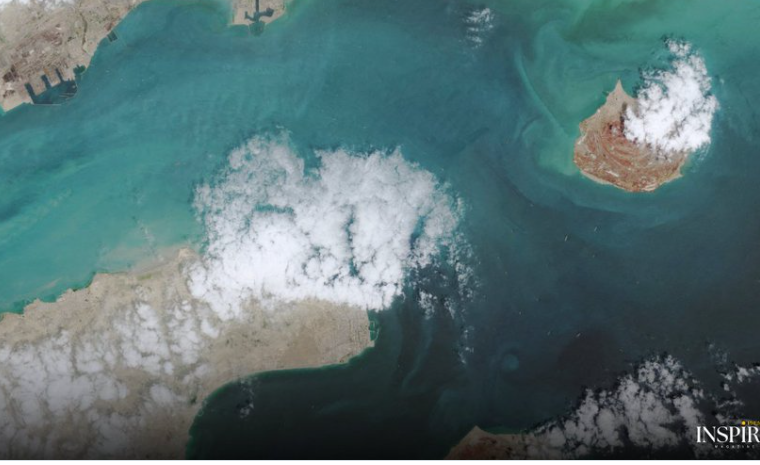
Reuters : Iran temporarily reopened the Strait of Hormuz on Friday following a ceasefire agreement in Lebanon, raising optimism about peace talks, but Tehran warned that it could close the crucial waterway again if the recent U.S. Navy blockade of Iranian ports continued.
Foreign Minister Abbas Araqchi announced on social media that the strait, a slender chokepoint in global energy trade, was open for all commercial vessels for the remainder of the U.S.-brokered 10-day truce that was agreed on Thursday between Israel and Lebanon, which was invaded by Israel after the Iran-allied Hezbollah militant group joined the fighting.
U.S. President Donald Trump, who with Israel launched the war on Iran on February 28 that has killed thousands of people and led to the strait’s de facto closure, told supporters at a rally in Arizona that Araqchi’s announcement marked “a great and brilliant day for the world.”
But subsequent statements and clarifications from both sides left uncertainty over how quickly shipping might return to normal, and some vessels could be observed making unsuccessful attempts cross the strait on Friday before turning back.
Trump said a U.S. blockade of ships sailing to Iranian ports, announced after talks with Iran last weekend ended without agreement, would remain until “our transaction with Iran is 100% complete”.
Iran responded sharply, with Iran’s parliament speaker and senior negotiator Mohammad Baqer Qalibaf saying in a social media post that the strait, which until recently carried about a fifth of the world’s oil trade, “will not remain open” if the U.S. blockade continues. He also said Trump had made multiple false claims about the peace talks on Friday.
Iran has said all ships must coordinate with the Islamic Revolutionary Guard Corps, which was not the case before the war. The Defense Ministry said in a statement quoted by state television that military vessels and ships linked to “hostile forces”, U.S. and Israel, were still not permitted to pass.
Vessel traffic data showed a group of around 20 ships, including container ships, bulk carriers, and tankers, moving through the Gulf toward the Strait of Hormuz on Friday evening, but most ended up turning back, although it was not clear why. The group included three container ships operated by French shipping group CMA CGM, which declined to comment.