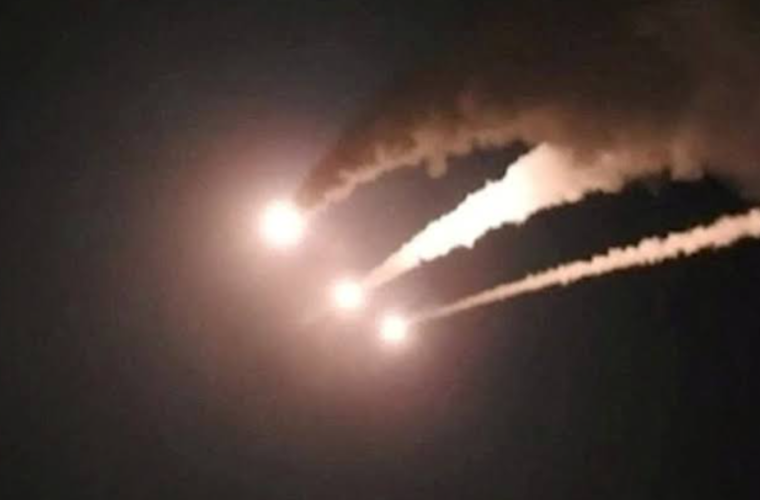
Reuters : U.S. forces struck Iran for a ninth consecutive day on Monday as the number of confirmed American military deaths in the renewed fighting rose to three and concerns grew over shipping through the Strait of Hormuz.
In a statement, U.S. Central Command said it started “a new wave of strikes” aimed at “degrading” Iran’s ability to attack commercial vessels in the strait’s vital shipping lanes.
The Central Command announcement gave no further details. But Iran’s semi-official Tasnim news agency, citing its own reporters, said U.S. missiles struck several Iranian cities early Monday.
Explosions were heard in Tabriz, Chabahar, Konarak, Bandar Mahshahr and Bandar Imam Khomeini, according to Tasnim.
In the latest American casualty reported in the war, the U.S. military said on Sunday that a service member was killed on Saturday in northern Iraq, where the U.S. has military bases, during a controlled detonation of what Central Command called unexploded ordnance on a downed Iranian attack drone.
Earlier in the weekend, the U.S. military said two of its service personnel died in Jordan and that a third was missing in action. On Sunday, Central Command said in a statement that “unidentified remains” had been found at the site of Friday’s attack and that “an examination process to verify the remains is ongoing.”
The latest casualty announcements brought the total number of U.S. military personnel killed since the war began to 17, with more than 420 others wounded.
For its part, Iran’s Islamic Revolutionary Guard Corps announced a surprise strike against “the enemy’s special operations headquarters in Syria’s Al-Tanf area.”
Iran earlier conducted a drone attack on U.S. military assets and equipment at Kuwait’s Al-Adiri camp and Ali Al Salem Air Base, Iranian state TV reported early on Sunday. Iran had previously hit both bases as part of its attacks against U.S. assets and allies in the Gulf over the past week.
Kuwait’s government said a desalination plant had been attacked for the second day running, causing a fire, in what it called a direct strike on vital civilian infrastructure.
Concerns about the flow of energy supplies through the Strait of Hormuz have persisted since the United States and Iran resumed open hostilities after accusing each other of repeatedly violating a ceasefire deal.