Kathmandu, Nov, 19: CPN-UML Vice-Chair Ram Bahadur Thapa has described the upcoming elections as a fierce political contest between what he called fascist and populist forces on one side and democratic and nationalist forces on the other.
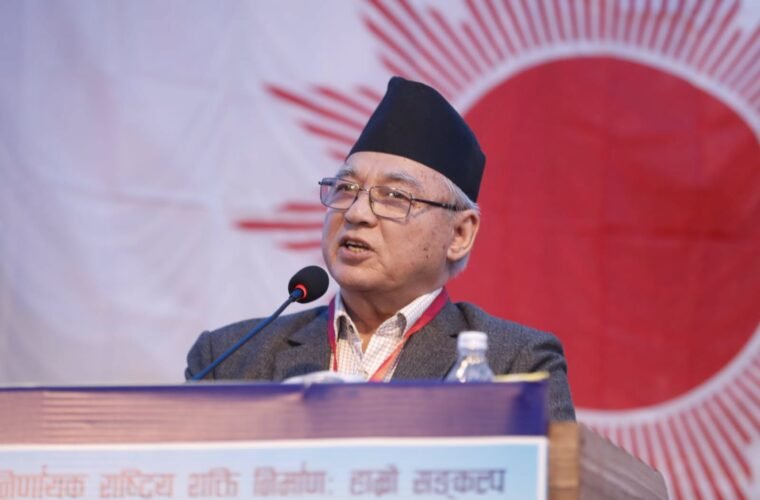
Addressing the party’s national gathering on Thursday, Thapa said there was no alternative to struggle for national sovereignty, democracy and prosperity.
He said the party must draw lessons from its defeat in the February 21 elections while preparing for upcoming local, provincial and National Assembly polls. The review of the previous election should serve as the basis for developing an effective electoral strategy, he added.
Thapa argued that the upcoming elections would take place under unusual political circumstances and would not be ordinary contests.
“Fascist and populist forces want to establish their monopoly, while external powers believe they must ensure the victory of their puppets to fulfil their interests. Therefore, the upcoming elections will not be ordinary,” he said.
Quoting ancient Chinese military strategist Sun Tzu, who famously said, “Know yourself and know your enemy, and you can win a thousand battles,” Thapa stressed the need for stronger internal unity within the party.
Reflecting on the UML’s performance in the previous election, he acknowledged that the party had failed to identify its principal political rival, recognize its own weaknesses, maintain internal unity, coordinate against its main opponent and establish direct connections with voters.
“Policy, leadership and the people are the main foundations of victory in any struggle,” he said.
Thapa also outlined the priorities identified by the party’s Central Committee, including rebuilding the UML as a decisive national political force, preparing for political movements to defend nationalism and democracy, protecting the constitution through legal means and strengthening public engagement.
He said the party must implement the conclusions of its election review and unite behind its leadership to prepare for future political challenges.
Thapa further claimed that recent political developments were creating favourable conditions for the UML. He pointed to growing geopolitical tensions, increased cooperation among democratic forces, a gradual decline in what he described as algorithm-driven public misconceptions and rising public dissatisfaction with the government.
“Recent developments are indicating signs of victory in parliamentary, street and legal struggles,” he said.
He reiterated that strengthening internal unity and rebuilding direct links with the public would be essential for the party’s future electoral and political struggles.