Kathmandu, Aug 30: The Government of Nepal is taking support from the international community as necessitated.
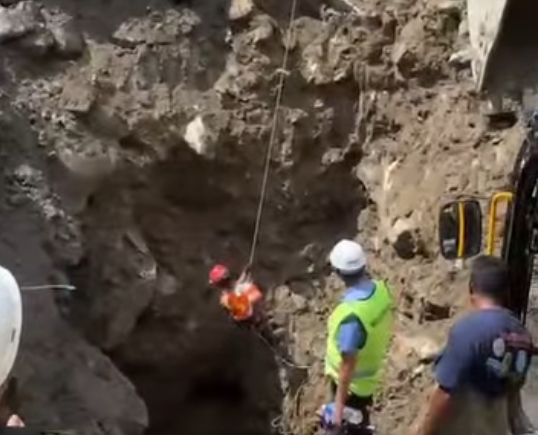
In coordination with the Nepali Army, some tunnel rescue experts from China, India and Republic of Korea have been mobilized, especially to rescue the persons trapped in tunnels of different hydropower projects affected by the August 26 Bhotekoshi floods.
During a daily press briefing at the Ministry of Foreign Affairs, about the post-disaster management initiatives being undertaken by the government, Foreign Secretary Amrit Bahadur Rai said the situation is being effectively handled by unified teams of our security and other agencies. “Our agencies are working with specialised technical teams for tunnel rescue from India and China and Republic of Korea.”
The government has also received airtight bags for the management of the dead bodies and more are being delivered. Likewise, a team of 18 forensics experts from India specializing in DNA analysis has also arrived.
The Foreign Secretary stressed that the government’s immediate national priority remains clear, as to save lives, locate missing persons, rescue them, provide urgent relief to survivors, and ensure that affected Nepali as well as foreign nationals receive appropriate assistance and support.
To this end, around 19,000 security personnel and 16 helicopters have been mobilized in the affected areas.
As operations continue, updated and further verified figures will be available on in the MoFA website as reported by its concerned agencies, particularly NDRRMA and the Nepal Tourism Board, he said.
Foreign Secretary Rai also reiterated the appeal of the Government to the public as well as national and international media to rely on officially verified information and to avoid publishing and broadcasting unconfirmed reports. “The Government of Nepal is mobilising all resources at its disposal for the search, rescue and relief operations. Separate teams including security personnel, provincial and local governments, medical and emergency responders are continuously working together in the affected areas of Rasuwa, Nuwakot, Dhading, Gorkha and Chitwan Districts to locate, search, rescue and assist them who have been affected and need urgent help.”
The Government continues its close communication and coordination with its immediate neighbours and international community. As many foreign nationals are still missing, a dedicated Emergency Control Room at the Ministry is coordinating with relevant agencies as well as with the families of missing people. Nepali diplomatic missions are also constantly sharing and updating verified information, and facilitating communication with families and extend any necessary assistance, identification and repatriation procedures.
The government has also expressed deep gratefulness to its friends and partners for their solidarity, goodwill and generous offers of support at this difficult time. Relief materials have been received from India, China and the UAE and other countries. Essential supplies are also being received from the USA, Japan, Qatar, Singapore, Australia, Malaysia, Myanmar, Bangladesh, Pakistan and other countries and partners, a press briefing note released by the Ministry says.
Referring to the detailed assessment of the needs currently underway for a PDNA, Foreign Secretary Rai said the government anticipates requiring international assistance for rehabilitation and reconstruction.
With regard to the Government’s priority for the search, rescue and relief operations, he said the Prime Minister himself is deeply engaged in coordinating and supervising this operation. To this regard, the Prime Minister had telephone conversation with the Indian Prime Minister on 26 August and with the Prime Minister of Pakistan on 28 August.
Minister for Foreign Affairs, Shisir Khanal, has also talked to his counterparts and dignitaries of
India, China, United Kingdom, South Korea, Australia, Bangladesh, South Africa, Venezuela, USA, among others.
On another note, the Foreign Secretary made it clear that the mortal remains of the dead (especially those not recognisable, amputated and decomposed due to longer time exposure to water) have been temporarily buried following standards and protocols such as those recognized by ICRC. Medical teams take DNA samples from every victim prior to the burial so that families can match records later, and will be allowed to exhume for necessary rituals.