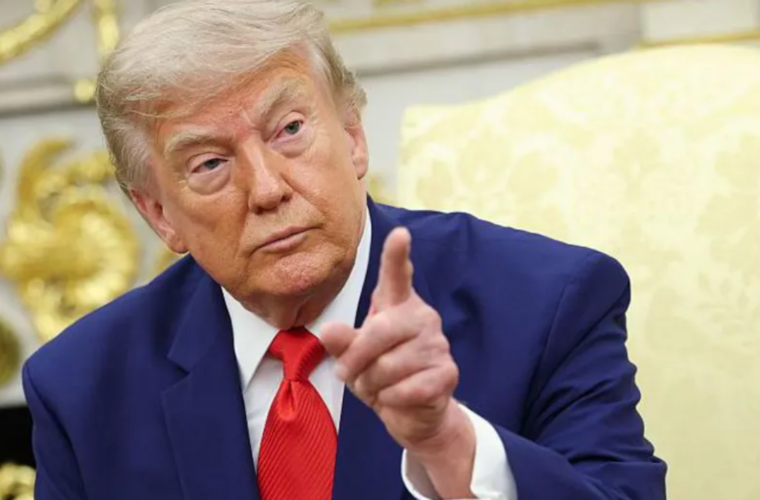
BBC: When another world leader meets US President Donald Trump the only certainty about what might happen is the uncertainty about what might happen. This was exactly the case ahead of President Trump’s two-day visit to Ireland.
Nobody could have predicted that by the end of the first day, the main global headline would be his desire to see a unified Ireland.
As the shockwaves of his remarks rippled through this island and Great Britain, it was unclear whether this represented a new US administration policy, or an off-the-cuff remark from a president who likes to take questions from reporters, and likes to give answers.
Former Republican Congressman Mick Mulvaney was Trump’s special envoy to Northern Ireland in his first term in office.
He cautioned against anyone reading too much into the president’s remarks. “This does not represent a shift in US foreign policy,” he said. “We’re still very much committed to the Good Friday Agreement.”
Democratic Congressman Brendan Boyle agreed. “There is bipartisan support for that deal, and that is not going to change.”
Although both agreed that Donald Trump was probably right to say that “eventually” unification would happen, that did not mean the US was about to start pushing for it.
Giving an answer to a question that is asked at a free-flowing press conference is one thing, but Donald Trump repeated his sentiments a short time later when he was delivering a speech to an invited audience at the US Ambassador’s residence.
In fact it was almost the first thing he mentioned, hinting that maybe he realised he had kicked over a can of worms at his earlier appearance.
The rest of that speech was curious. It was billed as a 20-minute address to Irish and Irish American business leaders, but was about twice that and strayed largely into domestic US matters.