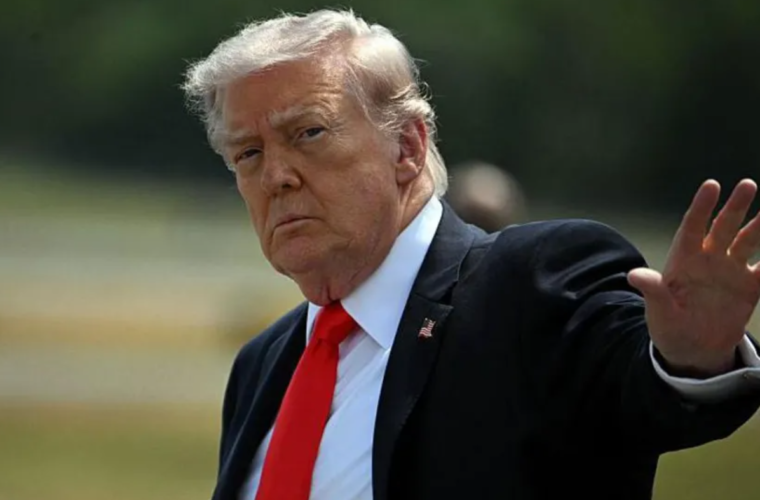
BBC: The US operation to guide stranded vessels through the Strait of Hormuz will be paused for a “short period of time”, President Donald Trump announced on Tuesday evening.
Trump said that “Project Freedom”, which began days earlier, would be halted by “mutual agreement” because “great progress” had been made toward a deal with Iran.
Iranian state media characterised it as a victory, saying the pause demonstrated that Trump “retreated” after “continued failures” to reopen the vital waterway for global shipping.
The US president’s announcement came as Secretary of State Marco Rubio said the initial US-Israeli offensive in Iran – Operation Epic Fury – was over after achieving its objectives.
In a post on social media, Trump said that he had made the decision “based on the request of Pakistan”, which has acted as an intermediary between the US and Iran. He added that the US blockade of Iranian ports would remain in place.
Trump’s announcement may surprise some. It undercuts a day’s worth of messaging from Rubio, defence secretary Pete Hegseth and Joint Chiefs chairman Gen. Dan Caine – all of whom vowed that the operation would ensure freedom of navigation and commerce in the Strait of Hormuz and Persian Gulf.
“We would prefer the path of peace. What the president [Donald Trump] would prefer is a deal,” Rubio told reporters on Tuesday.
What happens next is unclear. The administration had stressed that Project Freedom was a “separate and distinct” campaign from the blockade, which is meant to pressure Iran economically.
Project Freedom was meant to help restore the flow of oil from the region and the global economy’s eventual return to normalcy by guiding stranded ships out of the Gulf through the largely closed waterway. But if during the “pause”, global shipping firms and the insurance companies working with them are stymied by Iranian interference, it will be difficult for Trump to claim that objective has been achieved.
On the other hand, the administration may hope that freezing Project Freedom – which the Iranians strongly objected to – helps bring them to the negotiating table again.
Rubio’s comments earlier in the day came after a spate of attacks in the Strait of Hormuz raised fears the ceasefire between the US and Iran was in jeopardy.
Tehran did not commented on Rubio’s statement, but Iran’s parliamentary speaker Mohammad Ghalibaf earlier said: “We know well that the continuation of the status quo is intolerable for America, while we are just getting started.”
Ghalibaf, Iran’s top negotiator in last month’s talks with the US, said, “Shipping security and energy transit have been jeopardised by the US and its allies with the ceasefire violations and blockade. However, their evil acts will fail”.
Late on Tuesday the UK Maritime Trade Operations (UKMTO) said a verified source had told it that a cargo vessel has been struck “by an unknown projectile” in the Strait of Hormuz. Further details were not immediately available.
Earlier in the day the UAE said its air defences were engaging missiles and drones from Iran for a second day in a row. On Monday it accused Iran of firing missiles and drones including a strike on an oil port in the emirate of Fujairah which is located outside the Strait of Hormuz, calling it a “dangerous escalation”.
Iran on Tuesday denied launching any attacks on the UAE, with a military spokesman saying that, “If such an action had been taken, we would have announced it firmly and clearly”.
Operation Epic Fury began on 28 February when the US and Israel launched a wave of air strikes on Iran. Tehran responded by blocking the crucial waterway through which 20% of the world’s oil and liquefied natural gas usually passes.