Kathmandu, Aug 31: The recent devastating flood that swept through the Bhotekoshi and Trishuli river systems on August 26 caused significant loss of life and property, plunging the entire nation into a profound tragedy.
Within minutes, the flood transformed settlements on the riverbanks, road infrastructures, bridges and other physical infrastructures into scenes of widespread devastation.
The flood originated in the Bhotekoshi River along the Nepal-China border in Rasuwa entered towards the Nepali territory, and later spread downstream through the Trishuli river system, affecting Nuwakot, Dhading and Gorkha district, claiming the lives of many, displacing a large number of families, and causing extensive damage to physical infrastructure.
The sudden flood has raised serious questions about the effectiveness of the existing flood early-warning system. Why did the early-warning system fail to detect the disaster? What is the level of flood risk along the Bhotekoshi and Trishuli river systems in the coming days? Is there any risk of an outburst from the lakes formed due to floods? What are potential ways of keeping the citizens safe from the impact of such disasters in the future?
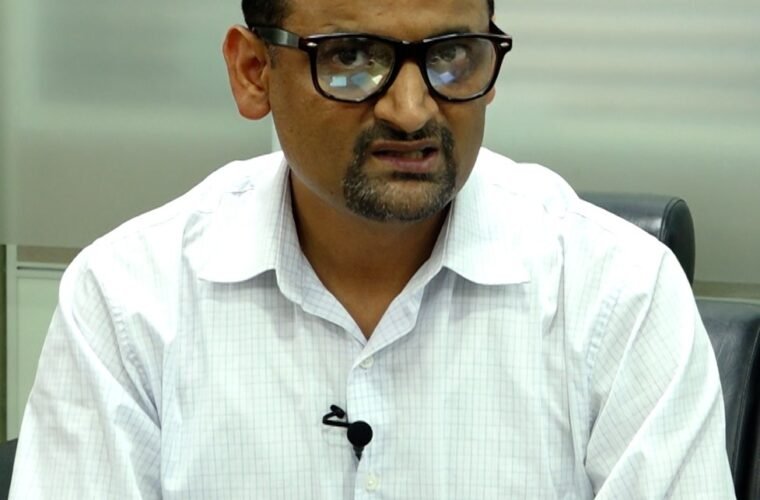
Below are edited excerpts from an interview on these issues taken by RSS journalist Pragati Dhakal with Binod Parajuli, a hydrologist from the Flood Forecasting Division under the Centre of Hydrology and Water Resources Research.
On Wednesday (August 26), the nation was struck by such unexpected devastating floods. Some have defined the incident as a ‘ Himalayan Tsunami’. Was there no pre-warning of the flood?
No, we did not receive any prior-information about the flood. In particular, the pre-warning system relies on equipment installed at various points along the river system. Near the Rasuwa border, we had an automated water measurement station located around one kilometer downstream. Similar sensors were also installed in Betrawati. However, the flood levels exceeded the capacity of the monitoring and warning system.
Generally, sensors can measure water levels up to 10 meters, corresponding to a flood with a return period of 100 years. Those devices are installed for floods that can return in 100 years. But this time, all those devices were washed away at once and we didn’t get any information.
We should either have CCTV systems in that area or some ‘real time monitoring’ to receive an alert when the lake bursts. Alternatively, we would have to make decisions based on seismological measurement indicating the occurrence of an earthquake. Again, even if the tremors of the earthquake are measured, all earthquakes don’t trigger avalanches. In such situation, it is difficult to make a decision.
This time, when the flood occurred, all the mechanisms we had in place failed. On the one hand, it became clear that the available hydrometric station was not meant for monitoring or providing adequate warning for a flood of such magnitude. On the other hand, we are not sure whether there was any sensor or early-warning system on the Chinese side capable of detecting such a significant flood. We have not been informed about this. Even if such a system existed, it may have been damaged or lost at the very beginning of the disaster, given the significant loss of human life in China as well.
Last year, a glacier lake also burst on the Chinese side, triggering a significant flood in the Lhende/Bhotekoshi River. Following that disaster, wasn’t there an agreement to exchange cross-border bilateral information on climate-related disasters?
At that time, no formal agreement had actually been reached between the two sides. We had held talks and engaged in relevant discussions, and we had agreed in principle to move forward with signing such an agreement. Now, we need to move forward with establishing a mechanism for the exchange of information. Before that, however, our joint efforts should focus on collecting data and conducting joint research and studies.
We cannot effectively exchange data without first carrying out research and surveys in the area to determine where the risks are and where sensors and other monitoring systems should be placed. As far as we know, there has been no systematic data collection or comprehensive survey for this purpose, either in Tibet or on the Nepali side of the border.
I believe that if the Chinese government had the data, we would have had access to it. If the Chinese side had that data, China could have taken measures to save the population of its region. Therefore, there is no room to suspect that China had access to an early-warning for this disaster.
But in the future, Nepal and China need to engage diplomatic initiatives on how to jointly expand this type of surveillance mechanism, install CCTVs, and other mechanism, providing Nepal with its ‘real-time access’ system, so that in the future, we can detect such disasters in time and protect our citizens.
If we had been able to issue an early-warning system regarding the Bhotekoshi flood, could the damage have been reduced? Or did the damage increase because some people did not take it seriously even after receiving the information on time? How do you assess this incident?
Both statements are valid. First, damage from the floods also occurred in those areas (Betrawati and downstream) where we had issued a pre-warning. Despite being informed about the disaster in advance, citizens could not predict the volume and scale of the flood. On the one hand, we had also not notified about the scale of flood in the information.
We had just informed. “There is a very big flood, let’s go to a safe place, to a higher place,” but the citizens did not realise that this flood was so significant and that it would destroy the entire village. Floods occur every year, so they may have assumed that that it would be a little bigger than that.
On the other hand, the citizens who assessed that a big flood could happen and went to higher ground to keep themselves safe were saved. So, there’s also a bit of negligence to the warning by the citizens in this.
If we had been able to give a warning a bit earlier, we probably could have saved more people. But considering that we couldn’t assess it, it seems like even if we had warned many citizens beforehand, there wasn’t much that could have been done, because especially in places like Betrawati and Bidur, there were many areas where people didn’t leave their homes even after getting the warning.
The flood warning that we relayed had reached the people before the flood reached Betrawati, yet there were still human casualties there. After the scale of the damage there, the people from downstream areas realized that taking precaution alone is not enough and they have to run away as fast as possible to be safe and that they would actually have to climb the hills. After that, many people left their homes and moved up the hills and were able to save their lives. If we had been able to give notice a bit earlier, we definitely could have saved more people.
But it was no longer possible to completely save lives simply due to the enormity of the disaster, because the citizens couldn’t really assess the real risk of the flood either.
So, what’s the main lesson we learned from this flood?
What we learned from this is that we should never ignore any warning of a disaster. Citizens need to take themselves to a safe place whether the flood is small or big because even in a small flood, if we evacuate to a safe place, we won’t get hurt, and if a big flood comes, we can avoid damage.
So in the future, we shouldn’t ignore any warning we issue or any information sent by citizens from higher areas. That information might say there’s going to be a huge flood, or it might not. As soon as we get a notice that a flood is coming, citizens should move to nearby higher ground, and in the hilly areas, just a few minutes is enough. This lesson is from the Bhotekoshi flash flood.
The same river and other rivers also have areas up in the Himalayas with similar risks. That’s why, in the future, residents living along all the rivers flowing from the mountainous regions across the country should prepare in advance to evacuate to nearby high and safe places.
It is said the risk of such flooding still exists. The glacial lake is blocked and there’s a risk it could burst at any moment. Small landslides have also blocked the stream, so how big do you think the risk is now?
According to the latest information, there are reports of two lakes forming. Of these two lakes, the lower lake reportedly partially drained out on Saturday night. As a result, we measured a flood of about three meters in Galchhi, Dhading on Sunday morning.
We have set up a new flood measurement station there. A hydrology station has been placed on the bridge that wasn’t washed away. A three-metre flood is considered a big flood. But it was still smaller than last Wednesday’s flood, and since it was measured way downstream from the affected area, it wasn’t the kind of flood that would cause damage.
Even now, there is still one lake up there that is completely intact, but it is said to be at risk of breaking. That’s why we will keep alerting the people in the downstream areas. Until the situation is such that the lake definitely does not pose a risk, we need to carry out rescue and relief programmes in the lower areas with caution.
Cannot we take any immediate measures to reduce the risk of that lake?
Right now, it’s risky to do any work on site. More landslides could happen, and anyone who goes there for work could be in danger. In the future, even though it is a matter we should think about how we can siphon out water from that lake without breaking it and reduce risks; for now, if that lake bursts, the only option left is to give early warning and save people.
Some residents are still residing outside. When can they expect to return home knowing their settlement is safe?
The areas that were flooded have been completely devastated, and it’s clear that those places are no longer safe. Even if the settlement is safe, staying there becoming updated is possible, but we strongly advise against returning to homes right now. There’s a chance of an even bigger flood than the one we experienced last Wednesday. That flood was the largest we’ve seen so far, but with the glaciers still melting in the upper regions, we could face even larger floods and avalanches. It’s crucial for residents to take precautions. For now, they should stay put until a better arrangement is made, but in the long run, relocating to a safer area is essential. This isn’t just about this situation; all villages along rivers and streams across the country need to consider their safety.
How can we relocate those settlements, where should they go, and how can the State assist the many citizens, especially living near the river?
The State needs to address this issue as well. We plan to enhance our early warning system because while we can relocate the settlements, there are still hydroelectric projects, irrigation systems, roads, and bridges in the area. It’s vital that travelers, workers, and security personnel are all kept informed for their safety. Many people are involved in agriculture and other activities, so if we can successfully relocate these settlements in the future, it will help mitigate both material and human losses. This flood has taught us an important lesson. We’ve learned from past experiences that when disaster strikes, we need to prioritize moving to safer locations.
How many challenges have been added to the collection of forecasts now that the hydraulic stations are swept away?
It’s very challenging. In the midst of that challenge, we are now trying to work urgently by placing CC cameras in the border areas. On Sunday, a team also went there to study the feasibility of installing CCTV cameras. Now we plan to have at least two. If that happens, we will be able to sit here in the control room day and night and study the images received from the CC camera and give information. At the moment, we are not in a position to install an automatic device to measure the flow of water in the river. The bridges there are all damaged. Everything is swampy, wet and there is no way to go back and set up another hydrological station.
Finally, what do you want to say to the citizens affected by the Bhotekoshi flood?
We request all flood affected citizens to be in high spirits and stay updated with any flood or disaster related information. Some information may not be released, but events may occur. If we all try to face this disaster together, further loss can be reduced.