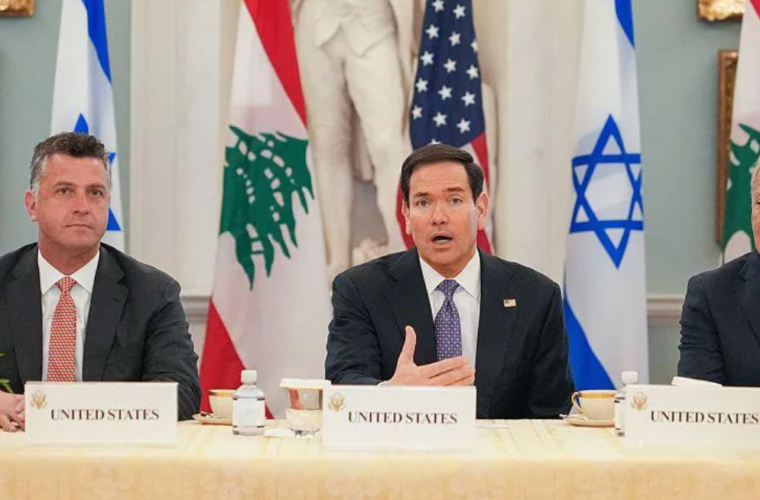
BBC: Lebanon and Israel have held their first diplomatic talks in over three decades, a rare encounter aimed at ending fighting between Israel and the Iran-backed Hezbollah group.
US Secretary of State Marco Rubio, who mediated, said it was a “historic opportunity” to end Hezbollah’s influence.
A US statement said the two sides had agreed to launch direct negotiations, at a time and place to be determined. Israel said it wanted to disarm all non-state terror groups – a reference to Hezbollah.
Lebanon called for a ceasefire and measures to address its humanitarian crisis. The two countries do not have diplomatic relations, and the last direct, high-level talks between them took place in 1993.
Over 2,000 people have been killed since Israeli military operations in Lebanon began on 2 March, just days after US and Israeli strikes began in Iran.
While the two sides were meeting in Washington on Tuesday, Hezbollah claimed at least 24 attacks on Israel and Israeli troops in Lebanon.
Drone and rocket alarms sounded in communities across northern Israel for much of the day.
Israel has said its operations in Lebanon are aimed at disarming and dismantling the group, which it also fought in 2023 and 2024 as the war in Gaza raged.
A spokesman for the US state department, Tommy Pigott, said in a statement after the talks that both Israel and Lebanon had agreed to work towards reducing the influence of Hezbollah.
The Lebanese side also called for a “ceasefire and concrete measures to address and alleviate the severe humanitarian crisis” in the country, he added.
Meanwhile, the US “expressed its support for Israel’s right to defend itself” from Hezbollah’s attacks, he said.
Speaking to reporters ahead of the meeting, Rubio said the meeting was “a process”.
“This will take time, but we believe it is worth this endeavour,” he said. “It’s a historic gathering that we hope to build on.”
In a statement, Lebanese President Joseph Aoun said he hoped the talks would “mark the beginning of the end of the suffering of the Lebanese people in general, and those in the south in particular”.
He said the “only solution” to the conflict would be in the Lebanese armed forces “being solely responsible for the security of the area”.
The Lebanese government’s capacity to confront Hezbollah, however, is limited.