Kathmandu, Aug 30: The devastating floods that struck the Bhotekoshi River last Wednesday have caused an enormous loss of life and property. By Saturday evening, the bodies of 669 people had reportedly been recovered, while thousands were feared missing. Hundreds more are believed to be trapped inside tunnels at hydropower projects, where rescue operations are still underway.
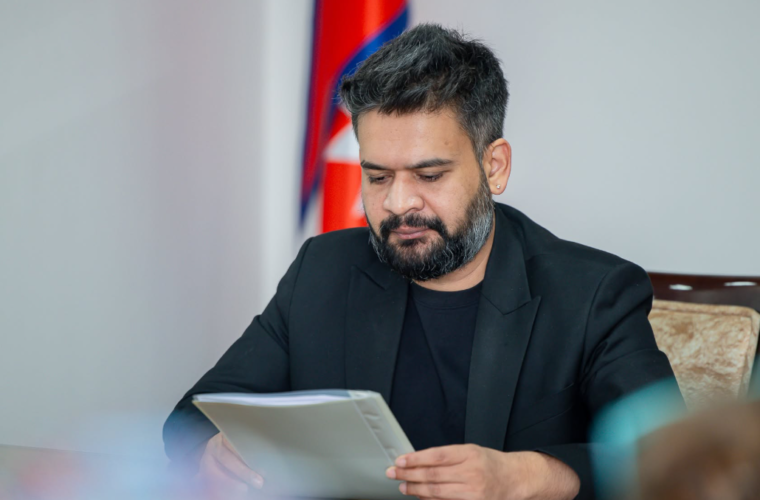
Prime Minister Balendra Shah visited Nuwakot the day after the disaster and returned, while the Home Minister has personally been deployed to oversee rescue efforts. Meanwhile, the Prime Minister has continued posting lengthy daily statements on social media, assuring the public that the government stands with flood victims.
But at a time when lives are still hanging in the balance, social media statements are not enough.
Communicating the government’s actions and issuing daily updates should primarily be the responsibility of government spokespersons and relevant agencies. The Prime Minister’s responsibility is to ensure that the rescue and relief operations are working effectively, mobilise every available national resource, coordinate international assistance and make urgent decisions that can save lives.
Yet representatives from the affected areas themselves say that the response on the ground has fallen far short of what is needed.
A Facebook post by Madhav Prasad Aryal, chairperson of Uttargaya Rural Municipality in Rasuwa, paints a disturbing picture of the situation. He wrote that, apart from basic security measures and actions taken only after receiving orders from above, little meaningful work was taking place.
“When I managed to charge my phone using the backup power at the cooperative office and briefly accessed social media, I saw the Prime Minister’s posts. From where we are standing, the federal government seems to exist in the sky and on social media. As I said earlier, except in a few areas, there has been no work during this disaster that people can genuinely feel.”
That statement alone should force the government to reflect.
Family members of missing people are spending their days and nights waiting along riverbanks, outside hospitals, at police stations and around possible search sites. Yet many say they are receiving no satisfactory answers. Families of those believed to be trapped inside hydropower tunnels are desperately pleading for faster rescue operations.
The disaster occurred on Wednesday, but rescue efforts inside the tunnels reportedly began only on Friday. Indian and Chinese specialist teams began their work only later, with the Chinese team starting on Saturday afternoon. The delay has fuelled anger and frustration among victims and their families.
They are no longer satisfied with repeatedly hearing the same sentence: “The search operation is ongoing.”
They want to know where the search has reached. They want to see what is actually being done. Most importantly, they want their loved ones brought home.
As public frustration over the government’s response continued to grow, journalist Anil Giri posted a powerful message on Facebook on Saturday morning. His words captured the anger and helplessness felt by many:
“There is no plastic to store the bodies. There are no ambulances to take the bodies home. There is no technical team to rescue people trapped inside tunnels for four days. Foreign countries say they are ready to help, but there seems to be no willingness to invite them. Victims pleading for their loved ones to be rescued quickly are being met with anger instead of compassion. Bodies are decomposing in mountain ravines, with no manpower available to retrieve them. Hundreds who died in the floods may have to be cremated collectively, yet there is not even sufficient mortuary space. Victims are sitting under the open sky without enough tarpaulins, while the government has billions of rupees in its disaster fund. Have we learned nothing from the earthquake 11 years ago? Has the government simply raised its hands in surrender?”
Giri may have written the post, but he spoke for many. That is why his words have resonated widely.
Following Wednesday’s disaster, Indian Prime Minister Narendra Modi reportedly called Prime Minister Balendra Shah immediately and pledged assistance. Humanitarian aid from India began arriving that same evening. Reports also emerged that around a dozen countries, including India and China, were prepared to send rescue teams and had sought permission to assist.
Yet the government was slow to allow international rescue teams to begin work. The Indian specialist team reportedly started work only after arriving on Friday night, while the Chinese team began operations on Saturday afternoon.
The Home Minister has been present in the field, and that commitment deserves recognition. But a minister standing at a disaster site cannot replace the specialised technical expertise required for complex tunnel rescues.
Rescue operations inside collapsed or flooded tunnels require highly trained engineers, specialised equipment and experienced international rescue teams. This is precisely where the Prime Minister and the government should be taking decisive action—mobilising experts, coordinating resources and personally reaching out to friendly nations for immediate assistance.
Instead, social media has become the government’s loudest platform.
Public anger intensified further after the government reportedly decided to bury unidentified bodies recovered from the Narayani and Trishuli rivers. Families in Rasuwa and other affected districts have themselves been cut off, traumatised and unable to travel. How can someone who cannot even leave their own disaster-hit area be expected to travel hundreds of kilometres to Chitwan and identify the body of a missing family member?
The government must understand the reality faced by these families.
During this period, reports have emerged that Foreign Minister Shishir Khanal has spoken by telephone with counterparts from several countries, including China’s Wang Yi on Saturday. Such diplomatic engagement is welcome.
But a larger question remains: Where is the Prime Minister’s direct diplomatic engagement?
Prime Minister Modi reportedly called Balendra Shah immediately after the disaster. Yet there has been no public indication that Nepal’s Prime Minister has personally reached out to the leaders of friendly nations to request urgent assistance.
During the 2015 earthquake and the COVID-19 pandemic, Nepal’s national leadership repeatedly communicated with foreign governments and international partners to seek assistance for citizens. When the life of even a single Nepali citizen is at stake, the state mobilises its highest institutions and explores every possible diplomatic channel.
Nepal has witnessed extraordinary efforts by prime ministers, presidents and parliamentary leaders in the past to secure the release and safety of individual Nepali citizens abroad. That is what a state is supposed to do—use every available means to protect the lives of its people.
So why does the Prime Minister appear silent when hundreds may still be waiting for rescue?
Why is there greater visibility on Facebook than in international diplomatic coordination?
Why were valuable days allowed to pass before specialised foreign rescue teams were fully mobilised?
And why were helicopters being used to transport political figures when disaster victims were desperately waiting for rescue resources?
The Home Minister’s presence in the field may be important, but he is not a tunnel-rescue specialist. Political leaders do not need to personally enter dangerous tunnels. Their responsibility is to ensure that the best experts, equipment and rescue teams reach those tunnels without delay.
That work must be coordinated from the highest level of government.
Prime Minister, this is the time to act—not to post.
Speak directly with the leaders of Nepal’s friendly nations. Pick up the phone. Ask for help. Request specialised rescue teams, advanced equipment, technical experts and every form of assistance that could save lives.
There is nothing more important than protecting the lives of citizens.
Leave the government’s daily social media updates to the spokespersons and communication teams. The Prime Minister should be focused on making decisions that matter on the ground.
Because when citizens are trapped, missing, injured and dying, Facebook posts cannot rescue them.
Prime Minister, speak to Nepal’s friends. Ask for help. Mobilise the experts. Use every diplomatic channel available. Save lives first.
Facebook can wait.
And if the government chooses to remain occupied with posts and statements while grieving families continue waiting for answers, history and those familieswill judge that failure harshly.