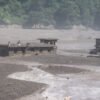
Kathmandu, Aug 31: The flash flood in the Bhotekoshi river on August 26 has instilled fear and distress in the lives of many individuals directly affected by it. However, the sorrow is equally intense for those who have lost their family members in the floods and the ensuing landslides.
Last Wednesday, the entire nation, especially the districts of Rasuwa, Nuwakot, and Dhading, was enveloped in the grief caused by this calamity. Shiva Giri, a technical officer at the Mailung Hydropower in Rasuwa, managed to escape from the project office but tragically lost his cousin and friends, moments after the flash flood struck the site.
This tragic event is beyond description. Giri, who fled alongside seven friends, conveyed his sorrow from his bed at the Teaching Hospital in Maharjgung. He recounted how the village adjacent to the project office was swept away by the deluge of the flash flood, tragically consuming the communities.
Giri, who was working there from Dang district, shared this traumatic experience, expressing his indescribable anguish. Together with his friends, they ran for approximately 12 hours in search of safer ground, accompanied only by a dog. They spent the night in a cave. The next day, they returned to the project office and called for rescue.
Fortunately, their call was answered by the Nepali Army, who airlifted them to Kathmandu.
‘Even though there was early warning, this kind of risk was not anticipated’ Chippu Dorje Tamang, an employee of Trishuli-3 ‘A’ Hydropower Project in Rasuwa and a resident of Rasuwa, was in Kathmandu on the day the flood occurred.
He was updating himself about the situation by watching the scenes and messages coming from the CCTV cameras of the event. Even though there were warnings about possible floods, he noticed that some people did not take the potential risk seriously.
“People underestimated it, thinking the flood wouldn’t reach this far,” Tamang said, recalling the tragic disaster. “Some people who had run away even came back to watch the flood. A few who went to see the terrifying form of the flood were filming videos. Some managed to save their lives by swimming. Before anyone realized it, it swept away many.”
He thinks that if people at the scene had been warned that there was a big flood and moved quickly to a safe place in time, the casualties could have been reduced.
According to Tamang, the news that even the 11-story customs building was taken down by the flood didn’t reach everyone on time. “The news that the 11-story customs building had collapsed didn’t get through on time. If there had been an early warning of that kind of danger, people might have become more alert and gone to safe places,” he added.
Even though they survived, it’s still hard for the survivors of the Bhotekoshi flood to return to normal life. They have made it through the flood, but they are uncertain about the situation of their colleagues, relatives, and friends.
Megh Bahadur Gurung, who works at the Mailung Hydropower Project, has also gone missing after the flood. His family is now waiting for news about him from the hospital to possible search sites.
Megh Bahadur’s wife, Jayanti Gurung, is at the hospitals where the flood-injured are being treated and at places where news about his condition might come in, anxiously waiting in the hope of learning about her hubby’s status.
“What should I do, how do I handle this,” is her anxiety. In her question, the worry for her husband, concern for the family, and uncertainty about the future all show at once. For the families of those missing in the flood, right now, there’s only hope of ‘breath or body.’ There is still hope that their loved ones will come back. But as the days go by, the waiting is becoming even more painful.