Kathmandu, July 30: Sherpa is synonymous to Sagarmatha, the highest peak of the world. The Sagarmatha (Mt Everest) is not only a place to show feat and adventure but it also the region that unleashes terror. Sherpas are best persons to deal with the Himalayas where cold, ice and adversity in death zones are commonplace. In absence of Sherpas, climbing Everest is almost impossible.
The labour, experience, skill and expertise of Sherpa people, the indigenous community of Solukhumbu district and vicinity, count much to know about Nepal’s Himalayas and climbing. The success of climbing lies in guide and judiciousness of these Himalayan stalwarts.
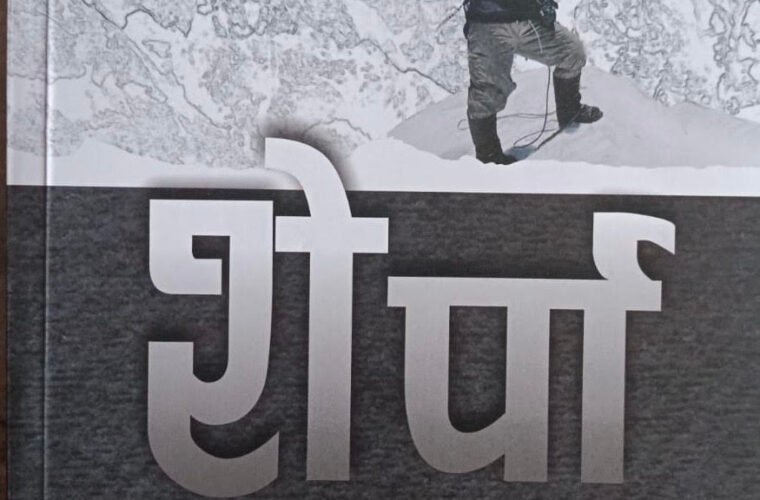
In this regard, the book, ‘Sherpa: Himalka Sachcha Sahashi’, penned by Umesh Zirpe is a relevant read to explore Sagarmatha, climbing, adventure, Sherpa and their fortitude. Zirpe an Indian tourism entrepreneur and well known expedition leader. He is the founding director of Zirpe Guardian Giripremi Mountaineering Association in South India. The tourism activities mentioning significant climbing feat of Sherpas are included in this book.
Climbing Everest is a mission which is made successful with various sorts of preparation, workforces, management and proper decision. The Sherpas whom the writer came in contact share their stories representing different times. Sherpas, who can deal well with Sagarmatha’s tune, suggest adequate precaution and judiciousness while scaling the world’s formidable peak.
The book sheds light how climbing has become a profession, passion, perseverance and reverence. While revealing their Himalayan insights to the writer, the veteran climbers including Kamirita Sherpa inform that they have not thought of retirement till body/strength favours- irrespective of age and number of ascent.
Hostility intact
Summiting Everest has seen changes over times. Irrespective of the growing availability of trekking and summiting items including clothes, ropes, equipment in recent years, climbing Sagarmatha (Mt Everest) is still hostile; it is challenging and a life-threatening ambition. In this regard, the views of the Everest summiteer for 32 times, Kamirita Sherpa, bear much significance. “Even some inexperienced persons make crowds on Everest. Inexperience, lack of training and of physical robustness cause fatalities,” he observes and suggests precaution and proper preparation.
People’s perspective has changed but the mountain is intact and formidable as always, he argues. The Himalayan legend suggests everyone to respect mountain. “We need to respect sovereign rights of mountain and make judicious preparation before launching expedition,” he reiterates. Here, his observation, ‘sovereign rights of mountain’, is most pressing because it bears caution that mountains are not only majestic but mighty and monstrous.
Angrita’s fortitude
Angrita Sherpa is another unavoidable personality. He was atop Everest for ten times from 1983 to 1996. Angrita is regarded as the backbone of mountaineering. He is known and remembered especially for his strength and resilience shown in December of 1987: he was atop Everest without oxygen and the temperature was minus 60 Degrees Centigrade. Present climbers’ efforts may ring hollow before Angrita’s as the latter’s fortitude is unparalleled. The present mountaineers as facilitated by technology and oxygen to accomplish the feat. Known as ‘hiu chituwa’ (snow leopard), Angrita breathed his last in Kathmandu on September 21, 2020 at 72. He suffered from multiple disease including liver and brain.
Even a scientific reason behind Sherpa’s resilience, the ability to cope with most hostile atmosphere is presented in the book. The writer brings a reference of scientific research that there is special arrangement in mitochondrial DNA of Sherpa which makes them able to survive with less oxygen than to other people.
Disaster and rescue
Sherpa are not mere mountain guide but also essential rescue operator and philanthropic person. An example to this is Lakpa Norbu Sherpa, who is a coordinator of the Himalayan Rescue Association as Sagarmatha Basecamp. Lakpa Norbu’s need is felt acutely once the tragedy occurs on mountain. An unforgettable moment was the role he played for rescue during avalanche on Khumbu Icefall of 2014 where a dozen plus Sherpas lost their lives. The avalanche occurred on April 18, 2014 carries a distressing story in Sagarmatha climbing history. Sixteen Sherpas had perished in the ice avalanche then. Carrying dead bodies from Khumbu Icefall to the base camp with mobilization of Sherpa workforce and helicopter was a daunting task. Lakpa worked actively for smooth coordination and management. A harrowing image is created when the writer shared Lakpa’s painful moment of collecting body parts of his dead friends scattered on Everest. Lakpa is regarded as a lifeline of Everest basecamp.
Similarly, Sonam Sherpa is a trader who produces modern jacket, down suits, sleeping bag and trouser for the climbers. He is an important person of trekking and tourism entrepreneurship excelling the field by producing the paraphernalia for climbers. With much homework, he became able to produce trekking goods/clothes equal to that of international brands. Sonam says, “Mountains have given us so much things that we cannot remain indifferent to these but remain indebted to.”
Born at Patle village of Okhaldhunga district, Maya Sherpa, initially wanted to become a police person, even tried weight lifting and boxing, but later established herself as a successful woman trekking guide. Her story is also explained here.
One’s success of summiting requires various sorts of workforce, such as porter, cook, aide, mountain guide, route opener and rope fixers. Sherpa are the people who fulfill such needs. While hailing one’s summiting of Everest or other peaks, we must not forget the roles they play.
The book is an essential read to know about Nepal’s Himalayas, Sherpa and their strength. The trend of climbing, contribution of Sherpas and associated issues like climate and its impact are also provided in the book by featuring the experiences of 11 Sherpas. Brief information on the festivals, food, houses and clothes of Sherpa community are also provided in the book which is helpful to build knowledge on culture and tradition of indigenous Sherpa people.
Generational shift
The writer has showed three different generations of Himalayan Sherpas (mountain guides) – the first generation was largely the porters guided by the need to manage bread and butter, while the second generation was able to make good income and expand business, and the third generation is not bound to climb or work as mountain guide, may rather climb the mountains as hobby.
It is true in deed that the first generation of Sherpa, that too from Khumbu region, had the compulsion to work for running family once the ascents began. Gradually, the second generation became able to provide standard guide with experience from the very initial level. They knew many things about Himalaya- climate, proper management to foreign climbers, education, skills, national and international exposures. Many of them became able to afford good education to their children in cities, including the federal capital, Kathmandu.
The second generation of Sherpa generally do not want their children work as hard as they did. The third generation though have interest in mountain are not forced to join, for many of them can be found in any part of the world pursuing higher education even in top universities and involving in research. Nowadays, with the experience in Nepal, some Sherpa even go abroad in the climbing season and provide various services as per their skills and expertise.
Writer Zirpe has expressed worry why the contribution of such Himalayan legends is not that recognized while other climbers (national and international) get both popularity and recognition.
The book also provides brief accounts on the origin, migration and settlement of the Sherpa in Khumbu region. The pressing issue of the modern day, impact of climate change, is presented from the locals. The people from the lap of Mount Everest share their experience of snowfall which is changed drastically from past to the present, signaling precarious days ahead. Their experience on climate change impact serves as wake up call for urgency of intervention to save Himalayas and livelihood from global problem.
The book was originally written in Marathi language. The current Nepali version is translated from English by Ang Babu Sherpa and Kumbha Raj Rai. The book is published by Rohan Prakashan, Pune, India.