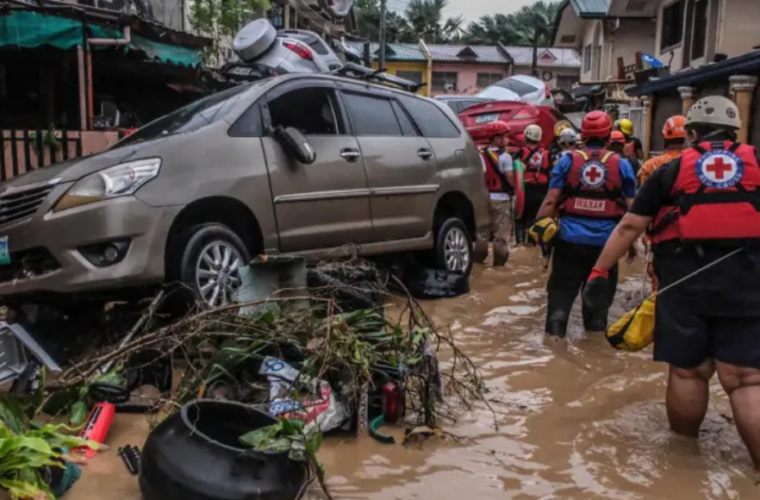
The death toll from Typhoon Kalmaegi in the Philippines climbed to 66 on Wednesday as residents of hardest-hit Cebu province began picking through homes and businesses devastated by the worst flooding in recent memory.
Floodwaters described as unprecedented had rushed through towns and cities, sweeping away cars, trucks and even massive shipping containers.
Cebu accounted for 49 of the fatalities, civil defence deputy administrator Rafaelito Alejandro said in an interview with local radio outlet DZMM, as he confirmed the overall tally.
“It was the major cities that got hit (with floods), highly urbanised areas,” Alejandro said, adding that 26 people remained missing.
“All the floods have subsided. Our challenge now is the clearing of this debris that is blocking our roads.”
AFP reporters on Wednesday morning spoke with residents as they cleaned up streets that a day before had been rivers.
“The flood here yesterday was really severe,” Reynaldo Vergara, 53, told AFP, adding that everything in his small shop had been washed away.
“The river overflowed. That’s where the water came from,” he said.
“Around four or five in the morning, the water was so strong that you couldn’t even step outside … nothing like this has ever happened. The water was raging.”
In the 24 hours before Kalmaegi’s landfall, the area around Cebu City was deluged with 183 millimetres of rain, well over its 131-millimetre monthly average, weather specialist Charmagne Varilla told AFP.
On Tuesday, provincial governor Pamela Baricuatro called the situation “unprecedented”.
“We were expecting the winds to be the dangerous part, but… the water is what’s truly putting our people at risk,” she told reporters. “The floodwaters are just devastating.”
Scientists warn that storms are becoming more powerful due to human-driven climate change. Warmer oceans allow typhoons to strengthen rapidly, and a warmer atmosphere holds more moisture, meaning heavier rainfall.
In total, nearly 400,000 people were pre-emptively moved from the typhoon’s path.(AP)