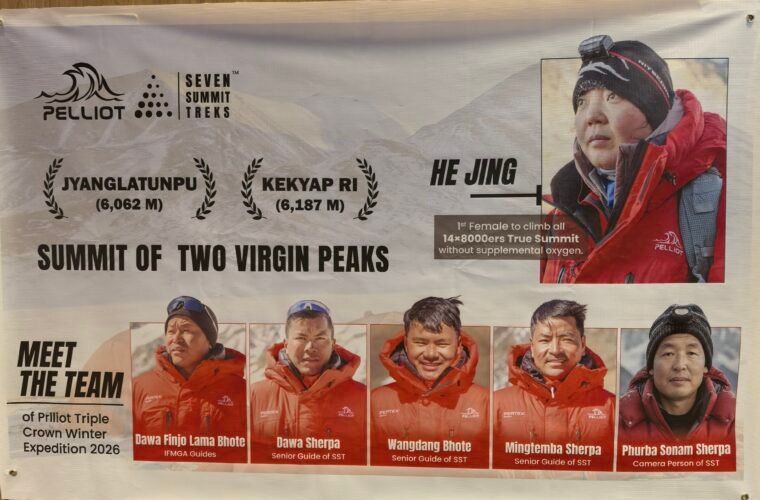
Kathmandu, Feb. 13: A joint expedition organized by Seven Summit Treks and sponsored by Pelliot has made mountaineering history in Nepal’s remote Upper Mustang, completing the winter first ascents of two previously unclimbed peaks in the Mustang Himal range.
Led by renowned Chinese mountaineer He Jing, the team successfully summited Jyanglatunpu (6,062m) at 9:25 a.m. and Kekyap Ri (6,187m) at 12:45 p.m. on February 9, 2026. The double ascent marks the first winter climb of the two virgin peaks in the isolated Himalayan region.
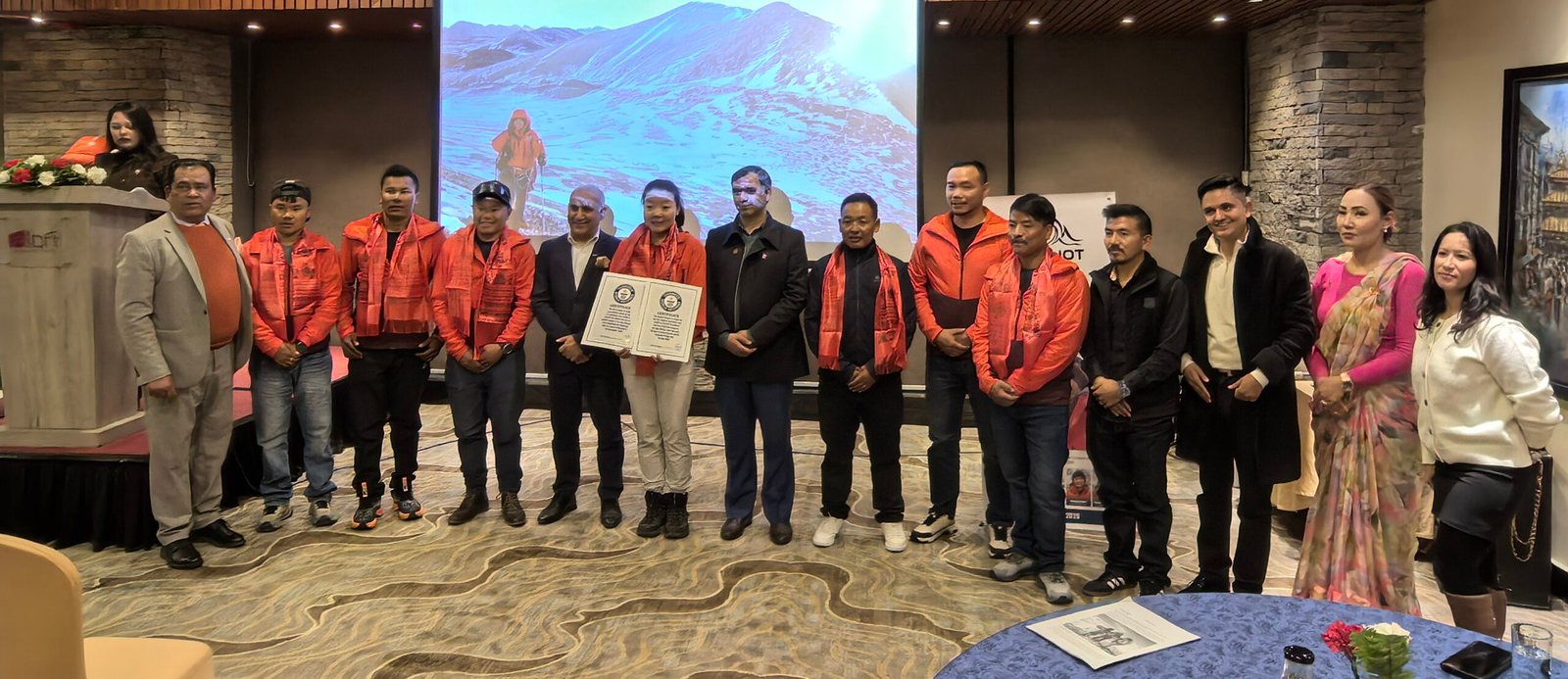
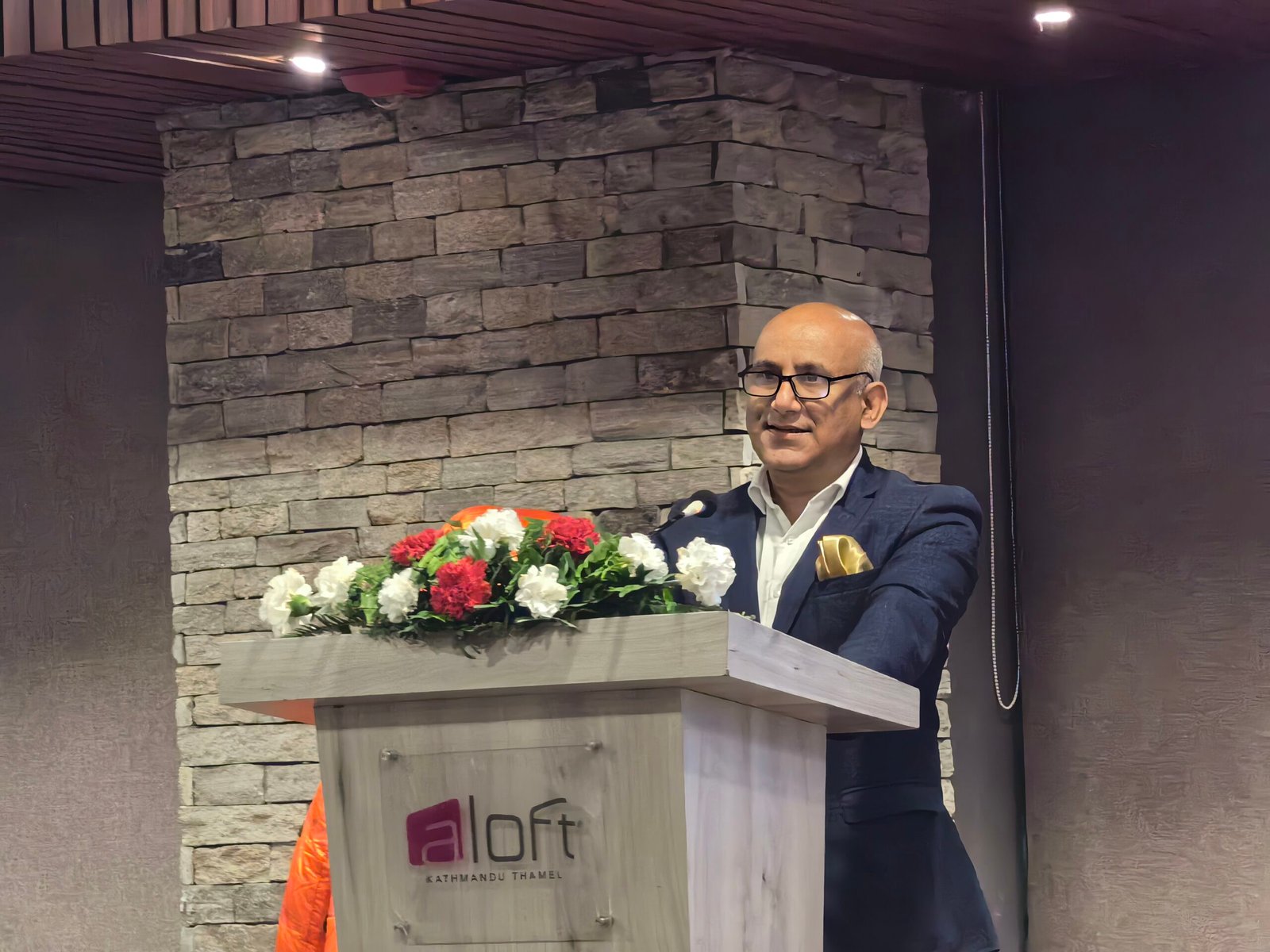
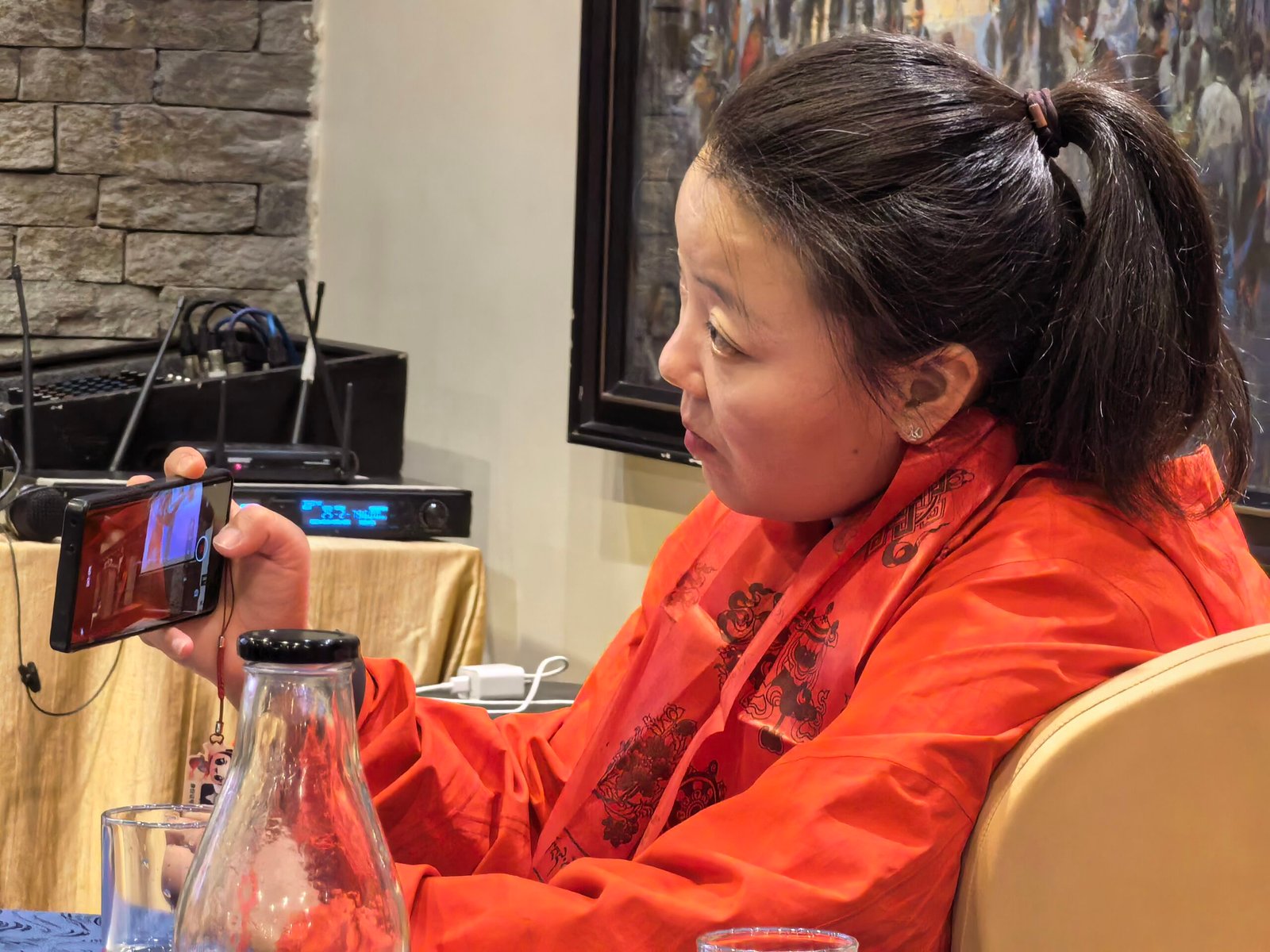
A press meet was organized at Aloft Kathmandu Thamel on Friday to congratulate He Jing and the Seven Summit Treks team for their landmark achievement.
Guinness World Record Recognition
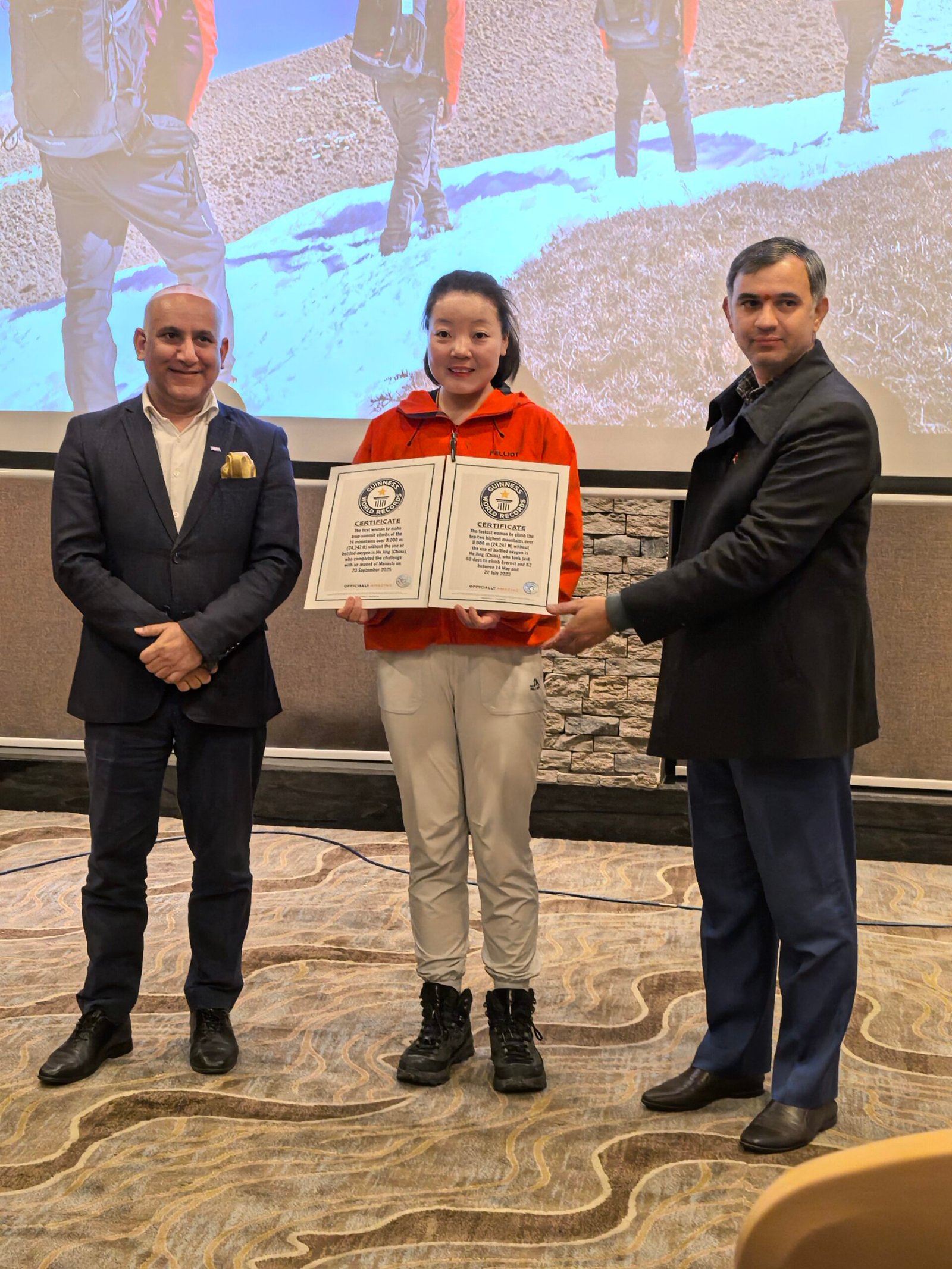
During the event, He Jing was presented with her Guinness World Records certificate for becoming the first woman to reach the true summits of all 14 eight-thousanders without supplemental (bottled) oxygen.
She also holds the record as the fastest woman to climb the world’s two highest 8,000-meter peaks—Mount Everest and K2—without bottled oxygen, completing both ascents in just 69 days between May 14 and July 22, 2022.
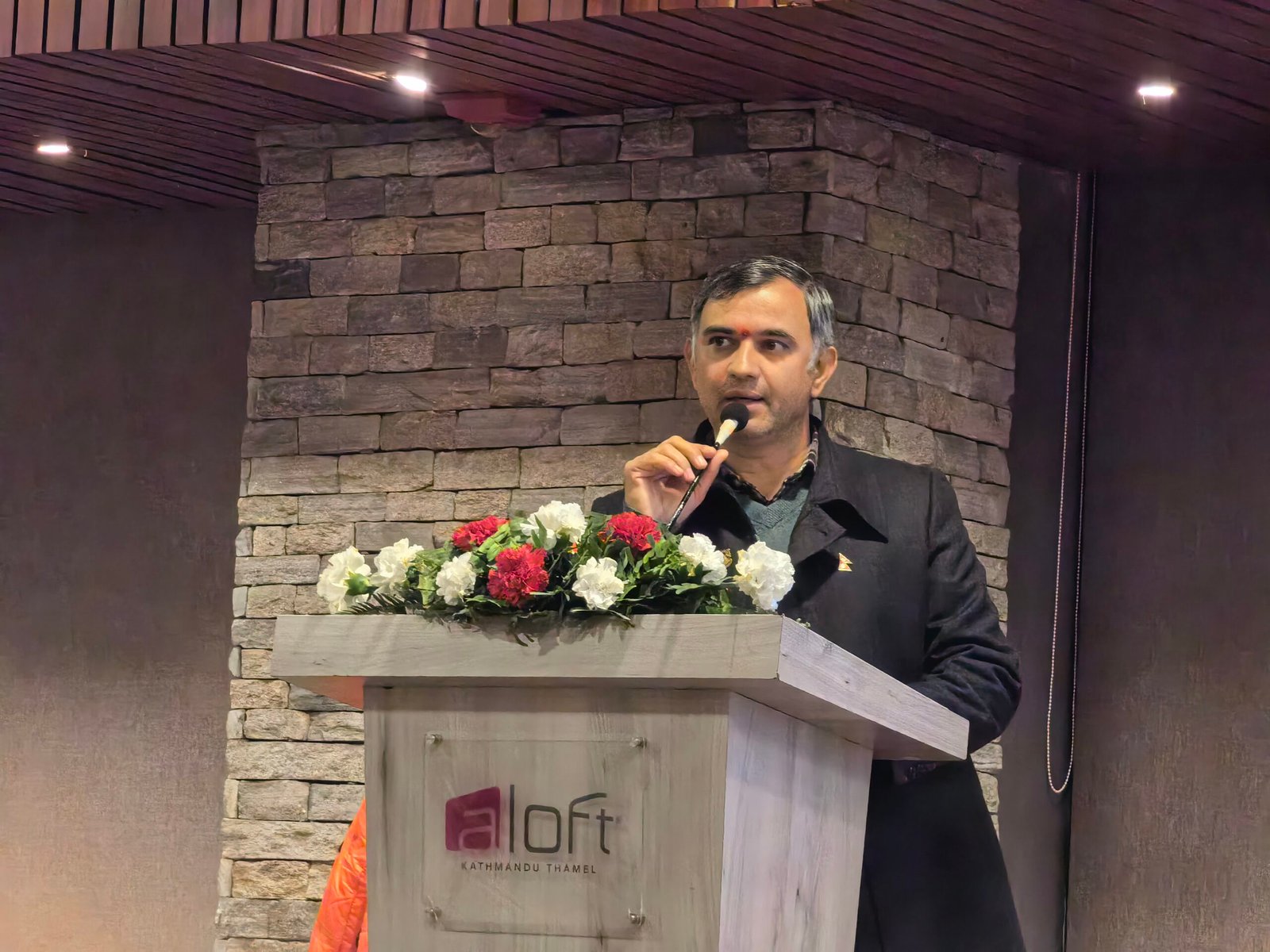
The certificate was handed over by Deepak Raj Joshi, CEO of the Nepal Tourism Board, and Rishi Ram Bhandari, General Secretary of Expedition Operators Association Nepal and NTB Board Member. Team members were also honored for their success.
Challenging Route and Alpine-Style Ascent
The expedition departed Kathmandu on February 4, entering the remote Ghyun Valley via an alternative access route previously explored by an earlier SST team. Base Camp was established near Ghar Gumba, approximately 200 meters lower than earlier camp locations in the region.
Heavy snowfall forced the climbers to abandon their original couloir-and-traverse plan. Instead, they opted for a ridge route, setting up an overnight camp at the base of Kekyap La Pass (5,600m). After crossing the pass, the team descended into the valley and followed the riverside—avoiding a hazardous glacier crossing—to establish an advanced base camp.
The summit push began at 2:25 a.m. on February 9 in freezing winter conditions. Once again, heavy snow in the couloir required a change of plan. The team chose a shorter but more demanding direct line up the southeast face over loose scree.
Jyanglatunpu involved moderate snow climbing, while Kekyap Ri proved significantly more technical. The climbers fixed 50–60 meters of rope for safety, and the final 100 meters required careful mixed climbing over steep snow and rock. A sharp, exposed rocky ridge demanded 30 to 45 minutes of focused climbing before the team finally reached the summit.
The descent followed the ridge under full rope protection before dropping 300–400 meters through an alternative couloir back to Base Camp.
Team Reflections
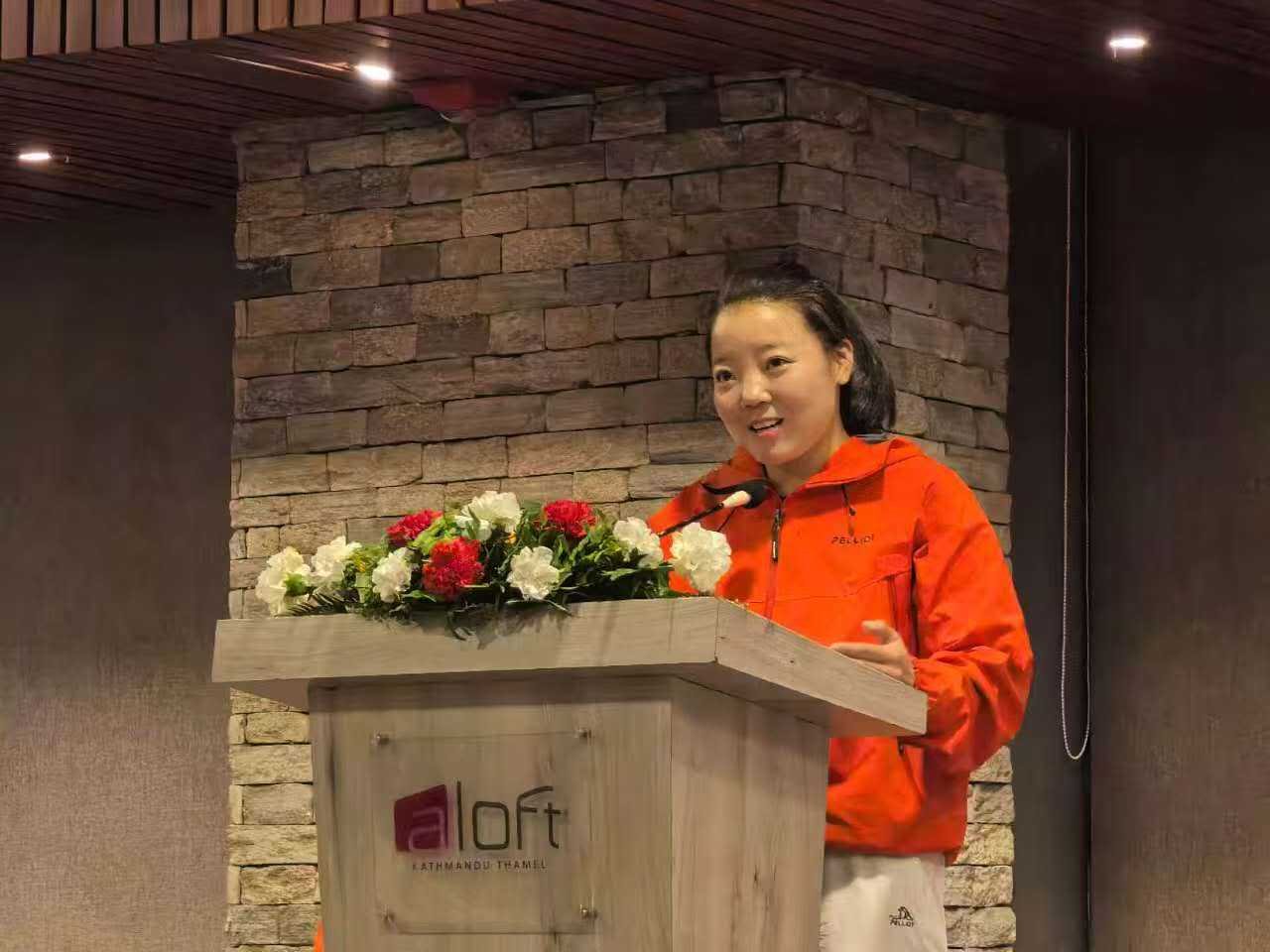
Speaking at the press meet, He Jing described the climb as deeply personal and distinct from her previous high-altitude achievements. “When I climbed all 14 eight-thousanders without oxygen, I followed large expedition setups. This time, we did everything ourselves as a small team. There was no big support system—just partners climbing together,” she said. “From the top, we could see Dhaulagiri and Annapurna. I’m very grateful to Pelliot for supporting us with reliable expedition gear.”
IFMGA Guide Dawa Phinjo Lama Bhote emphasized the navigational challenges and alpine style of the expedition. “Our original route couldn’t be followed because of snowfall and terrain changes. The second peak was more technical. It felt like climbing in Europe, where you plan and execute everything independently.”
Senior Guide Ming Temba Sherpa highlighted the logistical demands despite the moderate altitude. “The approach to Base Camp and from Base Camp to the peaks is long. For commercial climbers, a high camp would be necessary to summit both peaks efficiently. The mountains offer incredible views and strong potential for future expeditions.”
Phurba Sonam Sherpa described the excitement of attempting virgin peaks in a remote part of Mustang, while Speed Dawa noted both nervousness and pride in pioneering new routes in an unexplored alpine environment
Future Objectives
The team had also planned to attempt Chhuama IV (6,179m), the last unclimbed peak in the nearby Chhuama Range. However, time constraints following the successful double summit forced them to retreat, leaving the mountain as a challenge for future climbers.
The historic winter ascents further position Upper Mustang as an emerging frontier for technical Himalayan exploration.