Washington : Two U.S. warplanes were downed over Iran and the Gulf, Iranian and U.S. officials said Friday, with two pilots rescued and a third still missing and being hunted by Tehran’s forces.
The incidents show the risks still faced by U.S. and Israeli aircraft over Iran despite assertions from U.S. President Donald Trump and his Defense Secretary Pete Hegseth that their forces had total control of the skies.
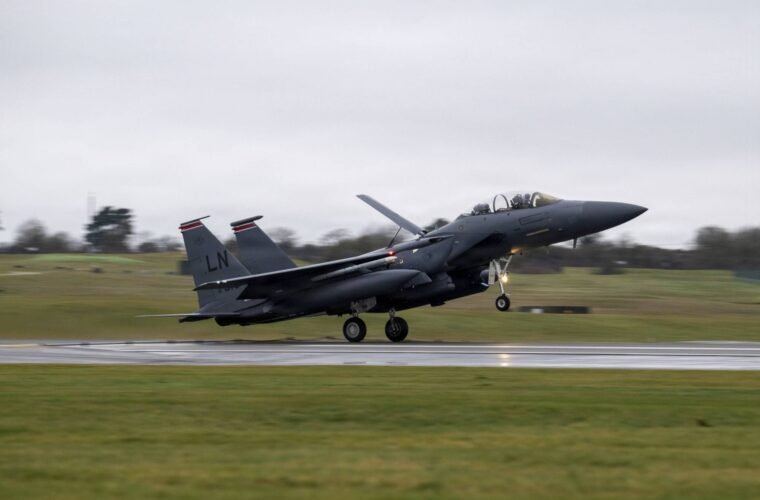
The first plane, a two-seat U.S. F-15E jet, was shot down by Iranian fire, officials in both countries said.
The second plane, an A-10 Warthog fighter aircraft, was hit by Iranian fire and crashed over Kuwait, with the pilot ejecting, two U.S. officials said.
Two Blackhawk helicopters involved in the search effort for the missing pilot were hit by Iranian fire but made it out of Iranian airspace, the two U.S. officials said.
The degree of injuries among the crew of the aircraft remained unclear. The status and whereabouts of the missing F-15E crew member was not publicly known.
Iran’s Revolutionary Guard Corps (IRGC) said it was combing an area near where the pilot’s plane came down in southwestern Iran and the regional governor promised a commendation for anyone who captured or killed “forces of the hostile enemy.”
Iranians, who have been pummeled by American air power for weeks, posted gleeful messages celebrating the plane downings. Iranian Parliament Speaker Mohammad Baqer Qalibaf said on X that the U.S. and Israel’s war had been “downgraded from regime change” to a hunt for their pilots.
Purported fragments of a downed U.S. fighter jet are seen in this picture said to be taken in central Iran and released on Friday.
Trump has been in the White House receiving updates on the search-and-rescue operation, a senior administration official said. The Pentagon and U.S. Central Command did not immediately respond to requests for comment.
The prospect of a U.S. service person being alive and on the run inside Iran raises the stakes for Washington in a conflict with low public support and no sign of an imminent end.
Iran has officially told mediators it is not prepared to meet with U.S. officials in Islamabad in coming days and that efforts to produce a ceasefire, led by Pakistan, have reached a dead end, the Wall Street Journal reported on Friday.
The U.S. and Israel opened the campaign with a wave of strikes that killed Iranian Supreme Leader Ayatollah Ali Khamenei on Feb. 28. The war has killed thousands and threatened lasting damage to the global economy.
So far, 13 U.S. military service members have been killed in the conflict and more than 300 have been wounded, according to the U.S. Central Command.
Iran has rained drones and missiles down on Israel. It has also taken aim at Gulf countries allied to the U.S., which have so far held back from joining the war directly for fear of further escalation.
CNN reported that about half of Iran’s missile launchers are still intact — despite more than 12,000 U.S. and Israeli strikes since they began the war in late February — and that thousands of one-way attack drones remain in Iran’s arsenal. The assessment may include launchers that are currently inaccessible even if they are not destroyed, CNN said, citing sources familiar with the matter.
In a security alert on Friday, the U.S. Embassy in Beirut said Iran and its aligned armed groups may target universities in Lebanon and urged U.S. citizens in the country to leave while commercial flights are still available.
Israel has been waging a parallel campaign against Iran-backed Hezbollah in Lebanon after the militant group fired at Israel in support of Iran.