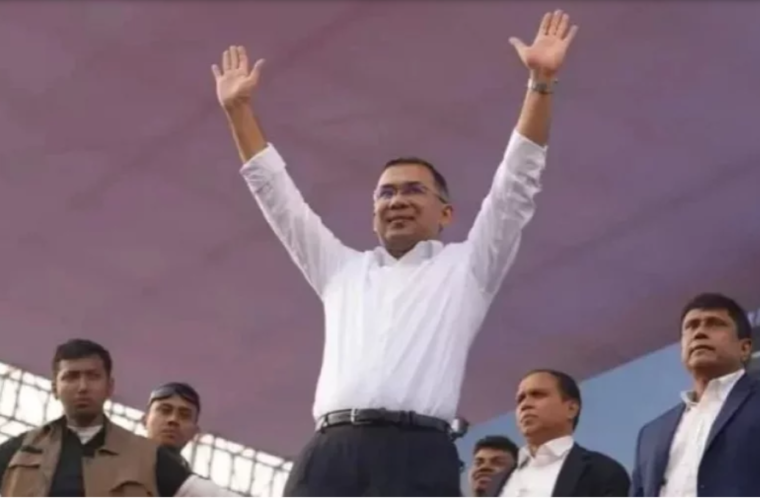
dhakatribune: Vote counting in the 13th national parliamentary election early this morning showed the BNP securing a majority of seats, with the party winning 151 constituencies so far.
Initial trends also indicated Jamaat-e-Islami would emerge as the main opposition, securing 43 seats.
Results continued to come in across the country, pointing to a decisive outcome in parliament.
In a landmark moment in Bangladesh’s democratic transition, millions of voters cast their ballots in a largely peaceful and festive atmosphere, marking the first general election and national referendum since the July Revolution of 2024.
Voting began at 7:30am and continued uninterrupted for nine hours, with voters using two separate ballot papers—one for the parliamentary election and another for the referendum—placed in transparent ballot boxes at 42,659 polling stations nationwide.
The election was held in 299 of the country’s 300 constituencies, as voting in Sherpur-3 was postponed following the death of an MP candidate.
According to the Election Commission (EC), voter turnout stood at 47.91% in 36,031 centres as of 2pm, nearly seven hours into polling.
However, reporters visiting several polling centres in the capital observed that turnout varied by area, though voter presence remained visible from morning through afternoon.
At around 11am, nearly four hours after polling began, long queues of around 700 voters were seen inside the playground of Banani Model School, where voters of different age groups—including young voters, women and elderly citizens—waited to exercise their franchise.
Several voters said this was the first peaceful and festive election since the December 29, 2008 parliamentary polls.
Tahmina Haque, a young voter who cast her ballot at Banani Model High School, said: “I have finally come to cast my vote. It feels truly wonderful. The voting is taking place in a peaceful and well-organized environment.”
Elderly voters were also seen turning out in large numbers. Among them was Swarna Begum, a 120-year-old resident of Jamjami village under Bhojgati union in Manirampur upazila of Jessore, who arrived at her local polling centre on Thursday morning leaning on a walking stick and supported by relatives.
At Segunbagicha High School and Begum Rahima High School centres, voters stood in multiple queues from early morning. Male voter turnout was higher in the early hours, while female participation increased gradually.
“We started voting at 7:30am. Voters are casting their ballots spontaneously. We have not received any complaints so far,” said Abdullah Al Mamun, presiding officer of the Segunbagicha High School centre.
Polling agents from BNP and Jamaat-e-Islami were present at all Dhaka centres visited by this correspondent. However, some independent candidates, including Tasnim Jara, alleged that their polling agents faced obstruction at certain centres.
The parliamentary election and referendum were held simultaneously, with officials noting that vote counting may take additional time as ballots will need to be separated.
Army personnel were deployed in front of several polling centres, while patrols were seen across the capital. Security measures were visibly tightened, with law enforcement stationed at key points.
CCTV cameras were installed at most centres, including near booths, though some centres did not have cameras inside voting compartments. Election officials said the enhanced security and monitoring boosted voter confidence.
Candidates from major political parties were seen casting their votes with family members and supporters across the country in a festive atmosphere.
BNP Chairman Tarique Rahman cast his vote at Gulshan Model High School and College in Dhaka around 9:30am, accompanied by his wife Dr Zubaida Rahman and daughter Zaima Rahman.
Speaking to journalists after voting, Tarique—who contested from Dhaka-17 and Bogra-6—urged voters to turn out in large numbers.
“The people of Bangladesh have been waiting for this day for a long time. Today, the people have regained their rights,” he said.
He also claimed to have received reports of “undesirable incidents” from different parts of the country on Wednesday night, adding: “If people turn up at polling centres in large numbers, any conspiracy can be thwarted.”
Jamaat-e-Islami Ameer Dr Shafiqur Rahman cast his vote at around 8:30am at the Manipur High School (Boys’ Branch) polling centre.
“If a fair election is held in the country, we are hopeful of victory, Insha Allah,” he told reporters before voting.
National Citizens Party (NCP) convener Nahid Islam cast his ballot at AKM Rahmatullah University College in the morning.
“I urge everyone to come to the polling centres without fear or obstruction and take part in voting in a festive atmosphere,” he said.
“Today, people must realize their ownership of this country. After 16 years without fair elections, we now have a chance to establish democracy, advance reforms by voting ‘Yes’ in the referendum, and move Bangladesh forward by supporting the 11-party alliance,” he added.
Chief Adviser Prof Dr Muhammad Yunus cast his vote at Gulshan Model High School and College around 10:20am.
Describing the day as one of “great joy,” he called it “the birthday of the new Bangladesh” and urged citizens to participate in both the election and the referendum. He concluded by greeting the nation with “Eid Mubarak.”
Chief Election Commissioner AMM Nasir Uddin said the polls were progressing in a “free and fair manner” so far.
“A few untoward incidents were reported outside polling centres, which are not significant,” he said after voting at Eskaton Garden High School around 9:30am.
The chiefs of the three armed services, most advisers of the interim government, and numerous candidates also expressed satisfaction after casting their ballots.
To ensure election-day security, nearly one million personnel from the armed forces, BGB and police were deployed. Authorities said voting concluded nationwide without any reported fatalities.
With the Awami League absent from the ballot for the first time in three decades, the election marked a direct contest of political visions, primarily between the BNP-led bloc and Jamaat-e-Islami.
Several foreign missions and international election observers, including representatives from the European Union, Commonwealth and IRI, praised the polls, noting a “strong sense of public enthusiasm” among voters