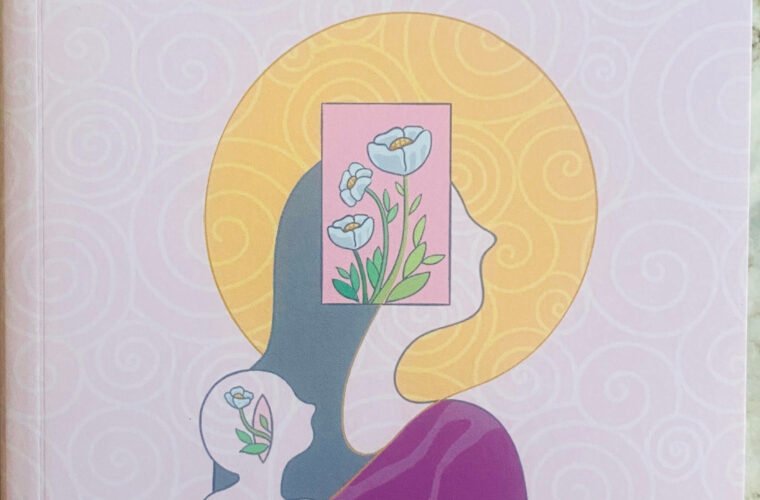
Kathmandu, Aug 11: ‘Shunyako Mulya: Sas, Sahash Ra Sneha Ko Katha’ is a fiction written by Dr Nawaraj KC. As the title suggests, the short stories bring to light the accounts of people who undergo plight, paucity and poverty but remain unfazed and exemplary.
The stories have the settings largely in Karnali region, a distant and difficult geography, but resided by people with humanity, love, compassion and kindness.
Dr KC, a pediatrician by profession, argues Karnali is itself a university where people from various walks of life find many things they miss in the school, college and university texts. The medical books and tomes he studied in college ring hollow before the plight of the Karnali people who suffer vacuity- a state of zero.
The Karnali people whom the writer has presented as characters in his stories have very little thing or literally nothing- no money for treatment, schooling and earning. However, they have essential things which many fail to possess- kindness, generosity, courage, and importantly the yearning for living. So, the ‘shunya’ (zero) cannot be interpreted as nothingness but something as a driving force which helps battle odds in life.
The writer sees the humanity from labour rooms; understands life by studying the plight of downtrodden ones and exposes social barriers through account of marginalized ones. The book is a medical person’s examination of Nepal’s health, education and social progress although it chiefly dwells on Karnali people and geography. The stories in this fiction bring to the light the status of health, education, development and investment which paint a sorry state and remind the governments to pay immediate attention for improving the situation.
The health conditions of mothers, infants and children and their significance are made vivid in the stories of Dr KC. In addition to medical practice, the writer also engages in a social campaign, which has impacted on his writing.
Dr KC has repeatedly applied counseling as a method of storytelling. His medical profession has given impetus to adoption of counseling to build narrative. The plights and poverty that have plagued Karnali people for long has been narrated lucidly. In case of the story titled, ‘Putali Aama’, the character Putali Aama shares an account in a way that helps a lady express her pent-up emotion.
The lady was suffering from specific psychological condition called ‘psychogenic dissociative mutism’. Such condition, as the writer elaborated, is a rare psychological state where a person suddenly becomes unable to speak due to tremendous stress. Such dissociative response is however not caused by physical or biological damages but due to severe psychological stress. Pressuring or insulting does not work for inarticulate people to speak but an atmosphere ensured safe for their expression, which is adopted by main character Putali Aama for the girl who escaped dreadful moment, a rape attempt.
Hailed from distant geography and languishing in a federal hospital for treatment of her relative, Putali Aama emerges such icon that she not only disrupts the syndicate of oppressive traders but also built entrepreneurship among women. She was forced to work in a locality near hospital as she could not manage money for treatment of husband in the hospital of federal capital. The scarcity or let’s say, zero, nothingness, makes her so powerful that it becomes a measure to empower many helpless ones. The story also reveals how the Nepali society treats women, while women sacrifices their entire lives for family and relatives. He advocates for women’s role in entrepreneurship and economy bringing reference of a book ‘Why Gender Matters in Economy’. The clarion call of the book is: to begin the journey of development, know the zero or reach before one/beginning where women are awaiting identity and recognition.
Time and again, the writer brings foreign references of medical and health interventions and researches to make clear how investment in health of women, children and parents count much for the country’s social and economic developments. The reference of a study conducted among the Romanian orphan/children adopted by Canadian families urges all concerned how the love, care and compassion of parents is instrumental to children’s positive psychology, which is ultimately linked to family and social wellbeing. Many children were adopted by Canadian families after downfall of the Ceausescu regime in 1989. The policy adopted by the British government for family care is another worth noting example.
‘Budheki Phupuaama’ is another riveting story bringing to light the disaster survivals. Strategy of survival, meaning of struggle and life, education and social status are explored here. Even the ethnic discrimination, which has afflicted the Nepali community, is condemned here: “In the country of Sagarmatha, there are many things taller than Sagarmatha. Ethnic discrimination is one among these things. The ethnic discrimination is more entrenched.” Here, despite being an important character of the story, Budheki Phupuaama has no name or identity. She is rendered zero in society but her struggle to educate Budhe is unmatched.
The most appalling and appealing is the letter written by an unborn child, a child in mother’s womb, to his father. The writer in the story ‘Bubalai Chithi’ creates such characters where a violent addict ultimately becomes a kind father once the fetus addresses him as ‘father’ and requests to save his life. The male character used to beat up the pregnant wife which could injure the baby in her womb. The writer/doctor adopts a technique that compels the patient’s husband to hear the plight of the unborn. It is so harrowing that it not only creates horripilation in readers but asks the families, communities and policy makers to hear the harsh reality.
Style and advocacy
Various medical terms are used in the book, but with clear explanations so that every reader finds it a very useful text to take care of health condition of his own and family members. When it comes to the book genre, we can even term it a ‘medical or health fiction’. The fiction with adequate blend of narrative and meditative styles keeps on engaging readers. It advocates for family to take care of children’s health and urges the State and policy makers to augment investment on women’s health and rights. Minute details on women’s body, pregnancy, children’s brain, sensitivity and their impact on overall health, psychology and wellbeing are given special emphasis.
Although the fiction chiefly dwells on health issues- especially of children and women- it is indeed an urgency to address Karnali crises ranging from social to economic fronts. It is time we recognized the ‘aamaarthatantra’ or the economy created and built upon contribution and sacrifice of mothers. The book was published by the Sangri-La Books, initially in 2079BS.