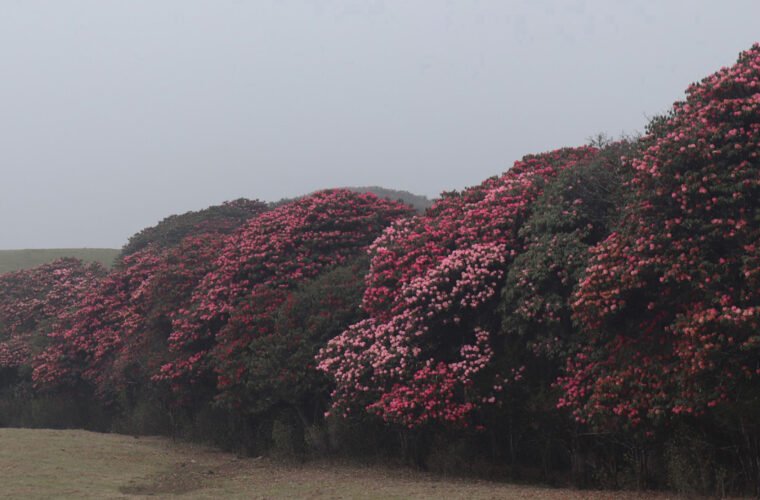
Khotang, May 3: Mundum Trail, one among the list of 100 tourist destinations in the country, has been decorated with varieties of blossoming gurans (rhododendron). It has added attraction to the vicinity.
The hills along the Mundum Trail of Khotang district are embellished with the rhododendrons flowered in different colours, which evidently bewitch the visitors, getting them stuck to have a sight and relish natural beauty.
Thanks to the country’s diverse climates and geographies, the Spring Season is featured with verdant hills and blossoming flowers. White, red and pink coloured rhododendrons paint the trekking route, beginning from Tawabhanjyang of Khimida in Sakela Rural Municipality-3, Khotang. It is one of the frequented destinations for domestic and foreign tourists, the locals said.
A team of trekkers led by Ojan Babu Acharya from Diktel bazaar of Diktel Rupakot Majhuwagadhi Rural Municipality, was found in the trail lately. He said the ambience was in deed mesmerizing.
The visit of the trekking route is further publicized through the digital platforms, giving wider visibility of the natural vista. Posting photos and videos on Facebook and Instagram thus seems mandatory to the visitors. Nature lovers from in the country and abroad have ardently described the Mundum Trail, posting photos and images taken during the visits. The season of rhododendron has increased internal tourists in the trail.
Acharya further observed that in addition to the flowering plants, huge meadows found during the travel are of no less enticement. “Relishing such natural beauty gives a heavenly bliss,” he said, exuding awe.
Natural beauty, biodiversity, cultural heritage and adventurous trekking compound the experience of bliss along the Mundum Trail. The researchers have informed that 18 varieties of rhododendron are found around the Maiyung meadow.
“Once I get time, I love visiting this trail which relieves me quickly of fatigue and energizes the body,” another visitor LB Magar said, adding that even the taste of locally produced things is a unique experience here. Eating dairy products including Yak milk while trekking on these hills is unforgettable moment, he added.
Practice of transhumance
The locals herd their cattle- sheep, Yak and horse- in the meadows for grazing during this season. Maiyung, Merung and Dhodre grasslands are famous for pasture. The traditional practice of transhumance is still found here. A sheep herder Laxman Sampang ‘Samip’ from Phedi of Kopilasgadhi Rural Municipality-1 informed that dozens of households were practicing nomadic movement of cattle, raising sheep and Yaks.
The Mundum Trail is not only associated with tourism, livestock and forest but also the historic Kirat community settled in the borders of Khotang, Bhojpur, Solukhumbu and Sankhuwasabha districts in the eastern hills of Nepal. The trail stretching on the border of Khotang and Bhojpur districts is given further prominence by major locations like Temke Maiyung (at altitude of 3,165metre), Salpapokhari (at altitude of 3,750 metre) and Silichung (at altitude of 4,165metre).
It takes nearly 13 days for foreigners to cover the trekking route connecting various hilly ridges and ranges, while 10 days for the Nepalis.
Chairman of Maiyung-Temke-Salpa-Silichung Tourism Promotion Centre, Ramesh Rai, informed that irrespective of trekking up the hills, the footfall is not a fatigue but the occasion to load off.
Horse riding is another sports and adventure to the tourism in the high hill meadows as part of trail visit.
For any keen observer and researcher, the Rai community and their culture are matters of study. The Mundum Trail is named after Kirat culture. The Mundum (or Mundhum) is a sacred text/scripture of Kirat community- Yakkha, Limbu, Rai and Sunuwar. It also spans the myths and rituals that shape values among Kirat people.
Sight of the birds, red panda, Himalayan tahr and wild bee gives a boost to make the travel memorable. The local cuisines made of indigenous products like Yak milk, buckwheat and millet are also in list to welcome visitors. The connoisseurs of local indigenous foods find taste in the dhindo made up wheat flour and chicken soup.
Rayo leaves, potato and beans are prioritized by the locals in the guests’ plates during goth-stay, a variant of homestay, where visitor/trekkers enjoy meals with herders that practice transhumance. Goth is a Nepali term for cowshed where even the herders stay to rear the cattle during pasture.