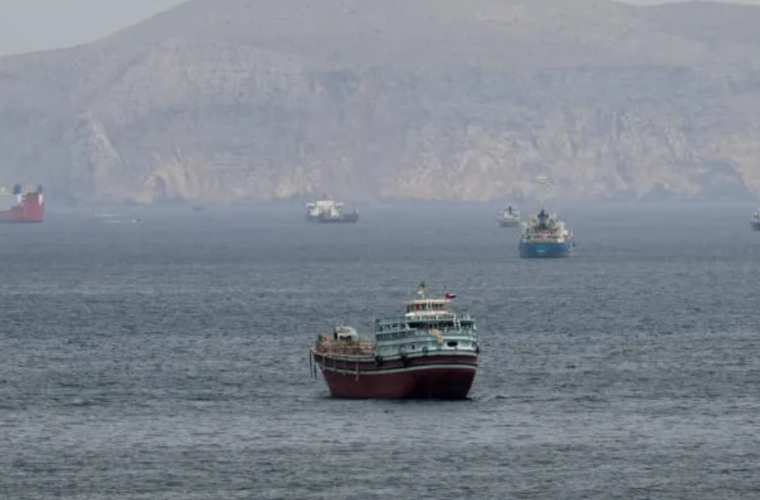
Reuters : Iran’s use of a swarm of small, fast boats to seize two container ships near the Strait of Hormuz could undermine suggestions U.S. forces have disabled its naval threat and reveals the challenges facing reopening one of the world’s most important oil export routes.
U.S. President Donald Trump on Monday acknowledged that while Iran’s conventional navy had been largely destroyed, its “fast-attack ships” had not been considered much of a threat.
He said any such vessels coming near a U.S. blockade set up outside the strait would be “immediately ELIMINATED” using the “same system of kill” deployed in the Caribbean and Pacific where U.S. air strikes have hit suspected drug boats and killed at least 110 people.
Those boats were not attacking large, unarmed commercial ships, however, nor nearly as heavily armed, with Iran’s Revolutionary Guards packing heavy machineguns, rocket launchers and, in some cases, anti-ship missiles.
Speedboat attacks now form part of a “layered system of threats,” alongside “shore-based missiles, drones, mines and electronic interference to create uncertainty and slow decision-making,” Greek maritime security company Diaplous told Reuters.
Before this week, Iran had relied on missile and drone strikes to hit shipping traffic around the strait, a route which normally handles 20% of the world’s daily oil and liquefied natural gas supply.
Those attacks had stopped with the April 8 ceasefire.
The seizure of the two container ships by Iran followed Washington imposing a blockade on Iran’s trade by sea and the start of it intercepting Iran-linked oil tankers and other ships.
“The civilian shipping industry is not equipped to prevent Iranian armed forces from seizing vessels,” said Daniel Mueller, a senior analyst at British maritime security company Ambrey. Typically, about a dozen boats are used in a seizure operation, he added.