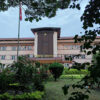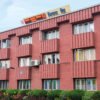
Reuters : An Iranian girls’ school that took a direct hit on the first day of the war had maintained a years-long online presence, including dozens of photographs of the children and their activities, before it was bombed along with at least six other buildings in an adjacent military compound, a Reuters investigation found.
The school’s online activity raises questions about how the American military vets and reviews strike locations. Reuters first reported that investigators at the US Department of Defence believe American forces were likely responsible for the bombing, and new indications have emerged that the US may have relied upon outdated targeting data.
Separated from the base by a wall painted with bright murals, the Shajareh Tayyebeh School was the northernmost building hit on 28 February. The building was destroyed during the barrage, and 150 students were killed, according to Iran’s ambassador to the UN in Geneva, Ali Bahreini. Reuters has not independently confirmed the death toll, which the Iranian Red Crescent said reached 175.
The coloured walls visible from satellite imagery as early as 2018 can be seen in a version of the school’s website archived in 2025, whose photographs showed girls dressed in identical pink and white in class and at play. The school was also tagged in a local business listing, Reuters found. Multiple satellite images from the months leading up to the strike provide other indications it was a school, including playground markings.
The cluster of buildings appeared to have been struck by a series of munitions, including at least one American Tomahawk cruise missile, according to an analysis of satellite imagery data, photographs and video of the strikes and their aftermath.
Video of the moment of impact by the Tomahawk on the buildings nearby showed a plume of smoke rising in the background. Satellite images from after the attack showed signs of at least seven distinct explosions along a roughly 325-metre axis, including the destroyed school, a rooftop punctured by a gaping hole, and a flattened building.
US President Donald Trump said on Monday that Iran might have Tomahawks, although he did not explain how, and no US officials have offered evidence of that claim. The Pentagon said the strike is under investigation but declined to comment on the school’s online presence, the satellite imagery or on the decision to target the Minab compound.
Two sources, both speaking on condition of anonymity, told Reuters outdated targeting data may have been to blame, which was first reported by the New York Times.
Mark Cancian, a retired US Marine officer and defence expert with the Centre for Strategic and International Studies think tank, said the US Central Command would have had a longstanding list of potential targets in case of conflict with Iran. “The lesson learned here would be to review the target lists periodically and more closely,” he said.
The school and at least six buildings in the adjacent Islamic Revolutionary Guard Corps compound were the only places struck within five kilometres between 28 February and 2 March, Reuters found. This suggests they were specifically targeted, rather than struck as part of a broad bombing campaign on the southern city.
Located near the Strait of Hormuz and surrounded by farm fields, Minab is home to one of the IRGC’s largest missile bases, according to state media.
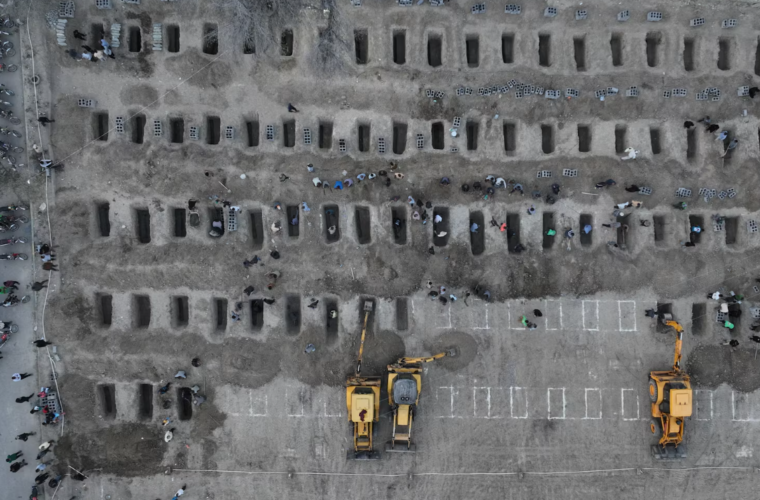
In the days after the strike, another place in Minab showed major disturbance in the analysis: the town cemetery. There, on 2 March, the dead children were buried, creating row after row of 20 tidy rectangular holes in the earth.
The Shajareh Tayyebeh School in Minab was one of 59 schools within the Persian Gulf Martyrs’ Cultural Educational Institute, a network affiliated with the IRGC, the military force that reports to Iran’s supreme leader, according to archived copies of the network’s website.
Some of the schools in that network, including the Shajareh Tayyebeh girls’ school and its equivalent boys’ school in Minab, listed their addresses as being in or adjacent to IRGC-controlled locations, according to the archived website.
Satellite imagery from mid-2015 shows the building was walled off from the rest of the base and appears to have operated as a school since at least 2018, when the painted murals are first visible on its outer walls.