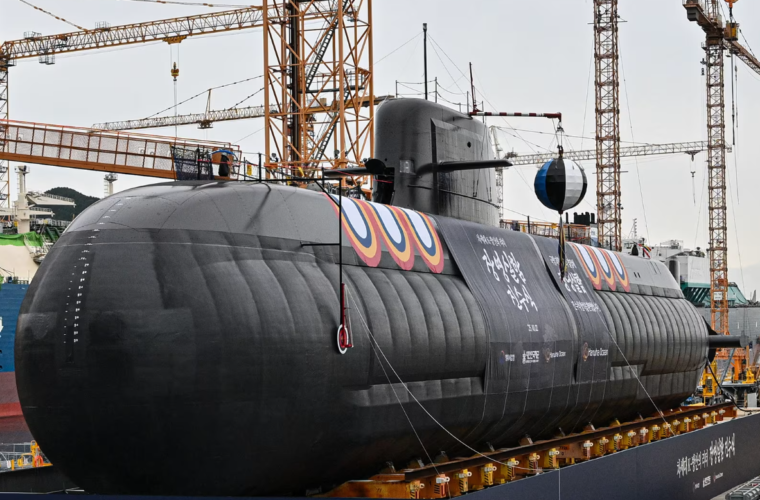
CNN: South Korea wants to join the undersea naval elite – and has received the blessing of US President Donald Trump to do just that.
Having Seoul become the seventh country in the world operating nuclear-powered submarines – joining the United States, Russia, China, France, the United Kingdom and India – could be a win-win.
South Korea could more effectively counter North Korean or Chinese moves in the waters around the Korean Peninsula; and that would free up the US Navy’s nuclear-powered attack subs to concentrate on patrols in hot spots like the South China Sea and the waters around Taiwan.
On both sides of the Pacific, building the vessels could mean thousands of high-paying manufacturing jobs, helping the US and South Korean economies.
“For South Korea, this would be a game-changer countering North Korea’s undersea threat,” said Yu Jihoon, a research fellow at the Korea Institute for Defense Analyses and former South Korean submarine officer.
Nuclear-powered subs “could transform South Korea’s role within the alliance to be a more capable security provider, so the strategic implications for the South Korea-US alliance are even more significant,” he added.
But, as is often the case in naval shipbuilding, the devil is in the details.
Nuclear-powered submarines (SSNs) come with many advantages. They can stay submerged for long periods of time – essentially for years, if they can carry enough provisions for the crew – whereas most conventionally powered subs must surface for air to run diesel engines, which in turn charge their batteries for running at depth.
They are also generally faster than conventionally powered subs and are in many cases quieter.
Acquiring them has been a decades-long wish of the South Korean government.
But Seoul has faced a key roadblock: under a decades-old nuclear agreement with the US, it is not allowed to reprocess spent nuclear fuel, despite having the technology to do so.
Korean officials have discussed the issue with previous US administrations, but always behind closed doors.